Halal food
Halal food in Seoul
Where to start
Itaewon Muslim Street Usadan-ro 10-gil, Hannam-dong
The hillside street running up to the mosque.
Densest cluster of halal-leaning restaurants in Korea: Pakistani, Turkish, Uzbek, Indonesian, Egyptian, Indian, and Korean-halal kitchens.
Seoul Central Mosque 서울중앙성원
Korea's main mosque, built 1976.
Friday Jumu'ah prayer ~12:30-13:00 KST.
Wudu facilities open to visitors.
Walk down the hill afterward for lunch on Muslim Street.
Hannam-dong (broader area)
Foreign-friendly neighborhood around the mosque.
Several embassies + foreign-supermarket scene.
More halal-friendly restaurants than central Itaewon.
Universities
Hongik / Konkuk / Korea University clusters have a few halal-friendly student-budget options.
Less density than Itaewon but useful if you're already there.
How to verify. the KMF tiers
HC. Halal Certified
Audited by KMF.
Halal meat, halal kitchen, no alcohol, no pork.
Highest tier. usually Muslim-owned.
SC. Self Certified
Owner is Muslim, prepares halal in-house, but not formally KMF-audited.
Generally trusted within the community.
MF. Muslim Friendly

Halal meat used, but the kitchen also serves non-halal food.
Cross-contamination possible.
Confirm with staff if it matters to you.
PF. Pork Free
No pork on the menu, but meat may not be halal-certified slaughtered.
The lowest tier; treat as "vegetarian + no-pork" effectively.
No sticker = unrated.
Don't assume. ask.
The Korean phrase "할랄 인증됐어요?" (hallal injeungdwaesseo-yo?) means “is this halal-certified?”
Hidden traps in Korean food
Soju and rice wine
Frequently splashed into stews, marinades, and bulgogi seasoning.
Ask “술 들어가요?” (sul deureoga-yo?. does it contain alcohol?).
Pork stock / lard
Many noodle soups, kimchi-jjigae, and sundae use pork bone broth even if no pork meat is visible.
Anchovy + shrimp paste in kimchi
Not haram, but worth noting for strict pescatarian-halal preferences.
Mirin in fried chicken / teriyaki
Sweet rice wine; Korean-style fried chicken almost universally uses it.
Bacon bits in side dishes
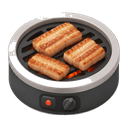
Some Korean BBQ houses serve a complimentary "bossam" or warm side that contains pork.
Buddhist-temple food
A safer non-halal-but-no-meat-no-alcohol option (사찰음식 / sachal-eumsik). check Insadong + Gyeongbokgung-area temple cuisine restaurants.
Getting to Itaewon Muslim Street
6 Itaewon Station · Exit 3
The closest subway exit.
Walk south toward the river, then take the first major right onto Usadan-ro.
The hill rises ~10-12 minutes' walk to the mosque.
Or 6 Noksapyeong Station · Exit 2
Slightly longer walk (~15 min) but flatter.
Useful if combining with the War Memorial of Korea or Yongsan Park.
Lunch / dinner timing
For Friday Jumu'ah, arrive 30-45 min early at the mosque, then descend to Muslim Street for ~13:30 lunch. busiest hour.
Weekday lunches 12:00-14:00 are calmer.
Halal groceries
Foreign Food Mart
On Muslim Street.
Stocks halal-certified meat (chicken, lamb, beef) and South / Central Asian pantry items.
Hannam Foreign Food Mart
Further down the hill.
Carries broader international + halal lines.
Coupang / Market Kurly
Deliver halal-tagged items but volume + variety is limited; physical stores are still better.
Korean supermarkets
E-Mart / Lotte Mart / Homeplus carry imported halal certified frozen items in larger branches; smaller stores rarely.
Prayer logistics
Seoul Central Mosque
서울중앙성원.
Hannam-dong.
5 daily prayers + Friday Jumu'ah ~12:30-13:00.
Open to visitors outside prayer.
Itaewon Mosque musallahs
Several restaurants on Muslim Street have a small prayer room upstairs; ask staff.
Airports

Incheon T1 + T2 each have prayer rooms.
T1: Gate 24 area.
T2: Gate 234.
Department stores
Lotte World Tower (Jamsil) and Shinsegae Gangnam have a prayer room for foreign visitors.
Universities
Hongik, Yonsei, KAIST all have international student musallahs available to visitors during weekdays.
Cuisine types you'll find
Pakistani / Indian
Densest segment on Muslim Street.
Biryani, kebabs, curries, tandoori.
Most are HC or SC tier.
Turkish
Doner kebab + lahmacun + Turkish breakfasts.
A few are family-run from owners who emigrated decades ago.
Uzbek / Central Asian
Plov, manti, samsa.
Korea has a substantial Uzbek diaspora. the cooking is authentic.
Indonesian / Malaysian
Nasi padang, rendang, mee goreng.
Smaller cluster, often student-budget pricing.
Egyptian / Arab
Koshari, falafel, shawarma.
A few specialist places near the mosque.
Korean halal
A small number of Korean-style kitchens have rebuilt their menu with halal meat (bulgogi, samgyetang minus alcohol).
Look for KMF stickers. these places tend to be HC/SC.
Practical tips
Cash backup
Most Muslim Street restaurants take card, but a few small shops are cash-only.
Bring ₩30,000.
Ramadan iftar
Many Muslim Street restaurants run iftar specials.
Confirm hours during Ramadan. some open only after Maghrib.
Hot weather wudu
The mosque has indoor + outdoor wudu stations; arrive a bit early in summer.
Modest dress
Not required outside the mosque, but restaurants on Muslim Street are mixed local + Muslim. comfortable smart-casual fits in.
Navigation

Use Naver Map / Kakao Map.
Google Maps is unreliable for walking in Korea.
What's nearby
Seoul for Muslim travelers: prayer, stays, shopping Itaewon Station guide Noksapyeong Station guide Itaewon area overview First-time visitor essentialsVerified September 2026. The KMF certification list and specific restaurants change; check stickers on the day. We're actively sourcing a verified halal-restaurant list for /eats. if you know reliable spots, email [email protected].