All 52 inscriptions
UNESCO
World Heritage
in Korea
Every palace, ritual and record Korea has on the UNESCO lists, with hours, fees and the exact subway exit for the ones you can visit.
World Heritage 세계유산
Palaces, fortresses, temples, villages and volcanic wonders: the 15 places UNESCO lists as heritage of all humanity.
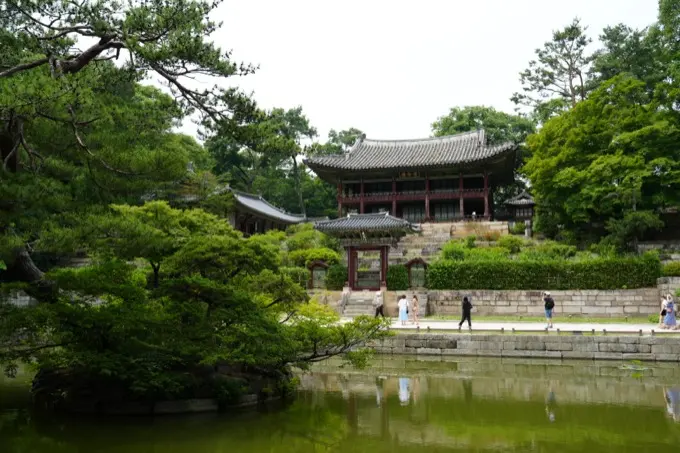 Inscribed 1997
 Changdeokgung Palace Complex 창덕궁
A Palace of Natural Beauty in Harmony with the Environment
Built in 1405 as the Joseon Dynasty's secondary palace, Changdeokgung breaks from the rigid symmetry of traditional palace design: its buildings follow the natural contours of the land, which is exactly why UNESCO listed it in 1997 as an exceptional example of architecture blending with landscape. Even the path from Donhwamun Gate to the throne hall makes two graceful turns to fit the terrain. Save time for Huwon, the Secret Garden, where ponds, pavilions, and forested hills were left almost untouched; it is considered the essence of royal gardening in East Asia. Though burned during the 1592 Japanese invasion, the palace was rebuilt and served as Joseon's official seat for over 250 years.
- Hours
- 09:00-18:00 (Closed on Mondays)
- Fee
- 3,000won (Garden 5,000won)
- Tours
- Foreign language tours (English, Japanese and Chinese)
- Getting there
- 5-minute walk from Exit 3 of Anguk Station, Subway Line 3; or 10-minute walk from Exit 7 of Jongno 3-ga Station, Subway Line 1, 3 or 5
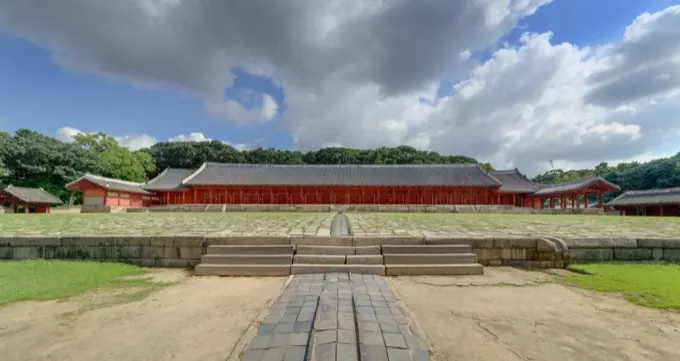 Inscribed 1995
 Jongmyo Shrine 종묘
A Place Where Ancestral Tablets of Kings and Queens from 500 Years of the Joseon Dynasty are Enshrined
Jongmyo is the royal Confucian shrine where the spirit tablets of Joseon's kings and queens rest, a place that hosted state ancestral rituals for more than five centuries. Completed in 1395, destroyed in the Japanese invasion, and rebuilt in 1608, it earned UNESCO listing in 1995 for keeping both its original form and its living ritual tradition intact. The main hall stretches an extraordinary 101 meters because it was extended every time a new ancestral tablet was added. Visit in early May or November to catch the Royal Ancestral Ritual and its music, itself listed as UNESCO Intangible Cultural Heritage in 2001.
- Hours
- 09:00-18:00 (Weekdays open for guided tours; Saturdays and national holidays open for regular admission)
- Fee
- 1,000won
- Tours
- Weekday guided tours in English, Japanese and Chinese
- Getting there
- 5-minute walk from Exit 8 or 11 of Jongno 3-ga Station, Subway Line 1, 3 or 5
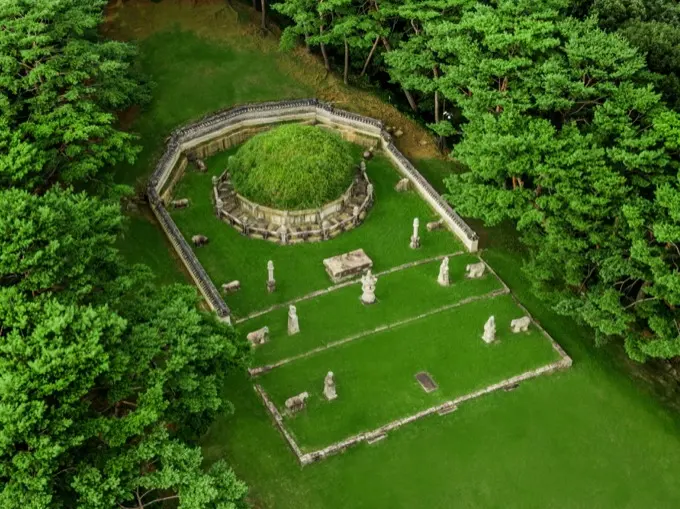 Inscribed 2009
 Royal Tombs of the Joseon Dynasty 조선 왕릉
The Only Case in Which All Royal Tombs of a Dynasty that Lasted 519 Years Have Been Perfectly Preserved
Scattered across Seoul, Gyeonggi-do and Gangwon-do, 40 royal tombs of Joseon's kings and queens were inscribed by UNESCO in 2009 as a remarkably complete record of a 519-year dynasty's funeral culture. Following pungsujiri, Korean geomancy, each tomb sits in superb scenery with a hill at its back and water in front, guarded by stone officials, horses, sheep and tigers arranged around the grassy mound. One touching detail: Geonwolleung, the tomb of founding King Taejo, is covered not with ordinary grass but with silver grass transplanted from his much-missed hometown. Ancestral rituals are still performed at the tombs today.
- Hours
- 09:00-18:00 (Closed on Mondays)
- Fee
- 1,000won
- Getting there
- Taereung: Bus no. 202, 1155 or 1156 (10 minutes) from Exit 1 of Hwarangdae Station, Subway Line 6; Donggureung: Maeul Bus no. 2 or 6 (15 minutes) from Exit 3 of Guri Station, Gyeongui-Jungang Line; Seooreung: Bus no. 702A, 702B or 9701 (35 minutes) from Exit 2 of Hongje Station, Subway Line 3; Yeongneung: 10-minute taxi from Sejongdaewangneung Station or Yeoju Station, Gyeonggang Line
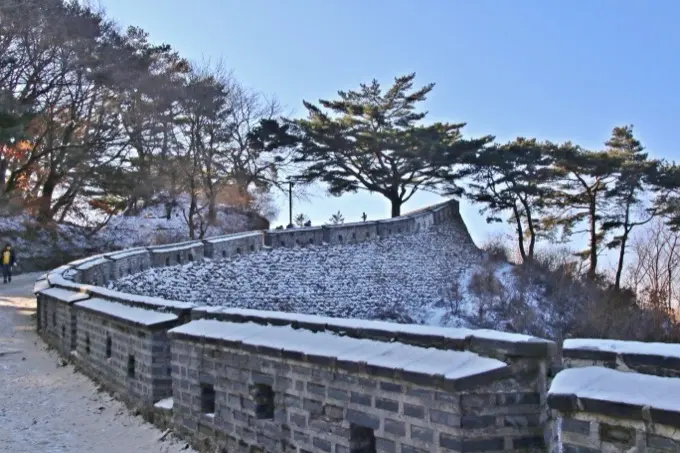 Inscribed 2014
 Namhansanseong (Fortress) 남한산성
Evidence of Archetypal Form and Periodic Development East Asian Fortification
Namhansanseong is a walled mountain town 25 km northeast of Seoul, built to serve as an emergency capital where the king could take refuge in wartime. UNESCO listed it in 2014 because its 12 km of walls preserve layer upon layer of military architecture from the 7th to the 19th century, tracing how Korean, Chinese and Japanese weaponry evolved from swords and bows to firearms and cannons. Remarkably, the fortress was largely built and defended by an army of Buddhist monks, who also raised temples like Janggyeongsa within the walls. Inside you will find the temporary palace, crescent-shaped defense walls and hidden secret gates.
- Hours
- Temporary Palace at Namhansanseong Fortress 10:00-18:00
- Fee
- Namhansanseong Fortress Free / Temporary Palace at Namhansanseong Fortress 2,000won
- Getting there
- 10-minute taxi from Sanseong Station, Subway Line 8
 Inscribed 1997
 Hwaseong Fortress 화성
An Innovative Town of the Joseon Dynasty Built with Technologies of the East and West, and Filial Piety
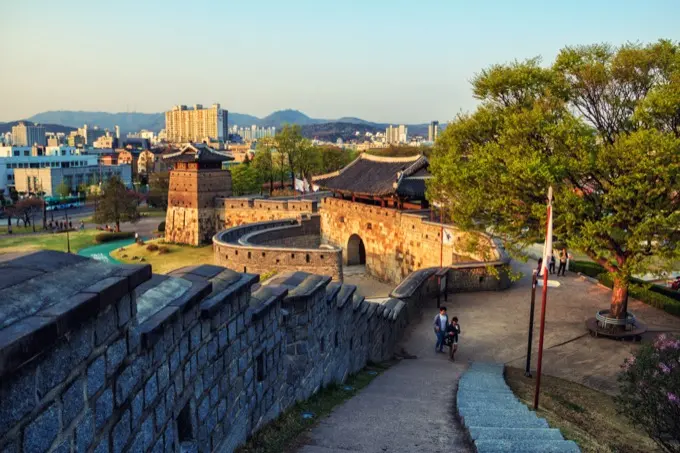
King Jeongjo, Joseon's 22nd ruler, began Hwaseong in 1794 as a new fortress city in Suwon, partly out of devotion to his father, Crown Prince Sado, whose tomb he moved nearby. Designed by Silhak scholars who studied fortresses of China, Japan and Europe, it fused the best defensive ideas of East and West, and workers even invented pulley-driven cranes to hoist the massive stones, earning UNESCO listing in 1997. The entire construction was documented in the Hwaseong Seongyeok Uigwe of 1801, a record so detailed it still guides restoration today. Walking the illuminated walls past Paldalmun Gate at dusk is one of Gyeonggi-do's great evening experiences.
- Hours
- Temporary Palace 09:00-18:00 (Mon & Tue); 09:00-21:30 (Wed-Sun)
- Fee
- 1,000won (Temporary Palace 1,500won)
- Getting there
- 15-minute taxi from Exit 7 of Suwon Station, Subway Line 1 or Su-in-Bundang Line
 Inscribed 2019
 Seowon, Korean Neo-Confucian Academies 한국의 서원
Educational Institutions in Countryside Villages that Fostered Roots of Political and Social Cultures in the Joseon Period
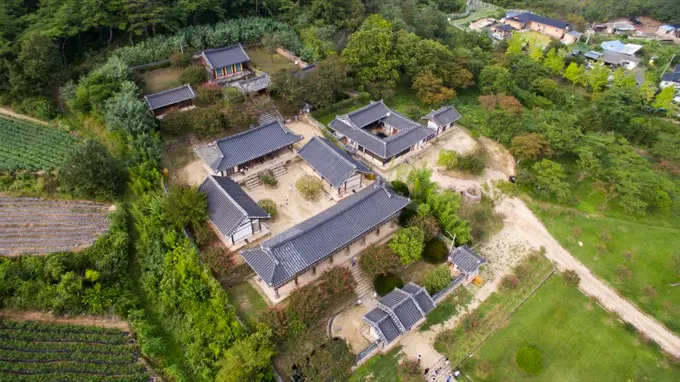
Seowon were private Neo-Confucian academies founded by local intellectuals from the mid-16th to mid-17th century, countryside campuses where scholars studied, debated and honored their intellectual ancestors amid beautiful natural scenery. Nine academies that kept their original form, from Sosuseowon in Yeongju to Dodongseowon in Daegu, were inscribed by UNESCO in 2019. Each follows an elegant formula: a shrine set toward the back, with lecture halls, dormitories, libraries and pavilions opening to the landscape in front. The movement grew so influential that after Sosuseowon received a royal charter in 1550, more than 600 academies flourished across 19th-century Joseon.
- Hours
- 09:00-18:00 at most academies (Donamseowon 07:00-18:00; Namgyeseowon and Museongseowon open all day)
- Fee
- Free at most academies (Sosuseowon 3,000won; Dosanseowon 1,500won)
- Tours
- Byeongsanseowon offers overnight stays and lectures
- Getting there
- Sosuseowon: 10-minute taxi from Punggi Station; Dosanseowon: 40-minute taxi from Andong Station; Byeongsanseowon: 40-minute taxi from Andong Terminal; Donamseowon: 5-minute taxi from Yeonsan Station; Oksanseowon: 30-minute taxi from Gyeongju Station; Namgyeseowon: 10-minute taxi from Hamyang Intercity Bus Terminal; Museongseowon: 30-minute taxi from Jeongeup Station; Piramseowon: 10-minute taxi from Jangseong Station; Dodongseowon: 50-minute taxi from KTX Dongdaegu Station
 Inscribed 2010
 Historic Villages of Korea: Hahoe and Yangdong 한국의 역사마을: 하회와 양동
Villages that Preserved Traditional Space Configuration of a Korean Clan Village, and the Confucian Culture
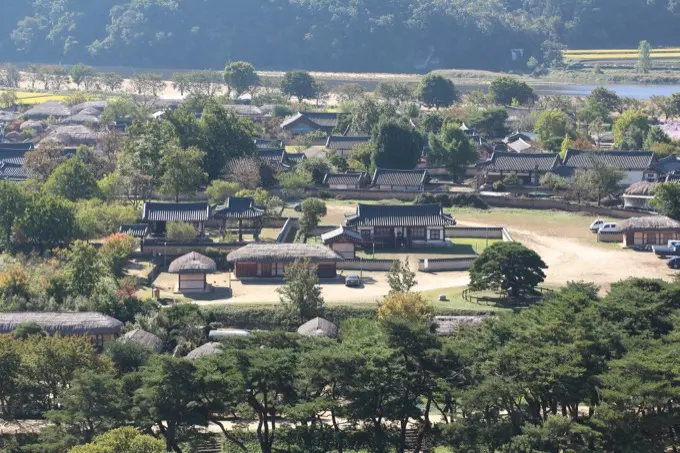
Two clan villages in Gyeongsangbuk-do where more than 600 years of Joseon aristocratic life still feel close at hand: Hahoe sits wrapped in a lazy bend of the Nakdonggang River, while Yangdong gazes out over a sweep of farmland near Gyeongju. Both were laid out on strict Confucian principles, with the head houses and tiled homes of the yangban rising above thatched commoner cottages, and were inscribed as World Heritage in 2010. Time your visit for the Hahoe Byeolsingut mask dance, in which commoners once gleefully satirized their aristocratic neighbors.
- Hours
- 09:00-18:00 (both villages)
- Fee
- Hahoe 5,000won; Yangdong 4,000won (various traditional events and programs offered)
- Getting there
- Hahoe: Bus no. 246 (1 hour) from Andong Terminal; Yangdong: Bus no. 200 or 201 to 208 (40 minutes) from Gyeongju Station
Baekje Historic Areas 백제역사유적지구
Baekje Culture Bloomed in the Midst of International Exchange in East Asia
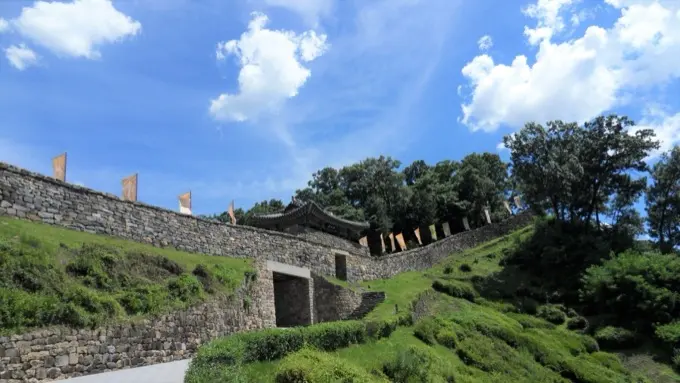
Eight sites scattered across Gongju, Buyeo and Iksan trace the ancient kingdom of Baekje (18 BCE-660 CE) as its capital moved from Ungjin to Sabi, leaving fortresses, royal tombs and grand temple sites in its wake. Together they capture a refined culture shaped by constant exchange with its East Asian neighbors, techniques the kingdom later passed on to Japan. The showstopper is the Tomb of King Muryeong, discovered untouched in 1971 with 5,232 artifacts inside, while Iksan's Mireuksa Temple Site keeps a monumental stone pagoda from the moment Korean pagodas shifted from wood to stone.
- Hours
- 09:00-18:00 at most sites (Gongju sites closed on Seollal & Chuseok; Buyeo sites also closed January 1; Iksan sites closed Mondays and January 1); Naseong Fortress open year-round
- Fee
- Gongsanseong 1,200won; Tomb of King Muryeong 1,500won; Gwanbuk-ri/Busosanseong 2,000won; Jeongnimsa 1,500won; Buyeo Royal Tombs 1,000won; Naseong, Wanggung-ri and Mireuksa free
- Tours
- Baekje Cultural Festival annually in September and October in Gongju-si and Buyeo-gun; Iksan Seodong Festival annually in May at Seodong Park
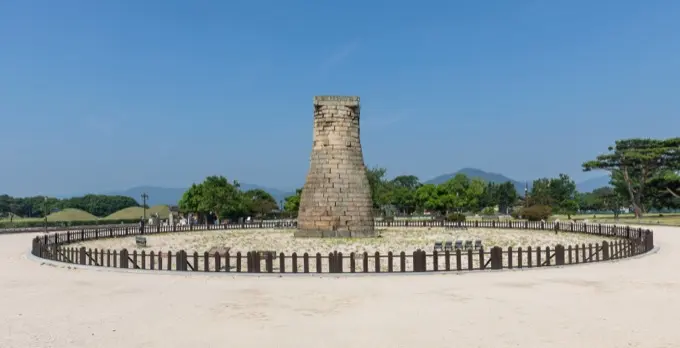
Gyeongju Historic Areas 경주역사유적지구
The Entire City of Gyeongju, the Ancient Capital of Silla that Lasted a Thousand Years, is a History Museum
Gyeongju was the capital of Silla for a full millennium, and the whole city reads like an open-air museum divided into five districts: Namsan, Wolseong, Daereungwon, Hwangnyongsa and Sanseong. Namsan Mountain alone holds hundreds of Buddhist carvings and pagodas, the Wolseong district keeps Cheomseongdae, the oldest observatory in Asia, and the grassy tomb mounds of Daereungwon rise right beside downtown streets. Inside one of them, Cheonmachong, excavators found a gold crown and a painted heavenly horse that still define the image of Silla splendor.
- Hours
- 10:00-18:00 (Closed on January 1, and Seollal & Chuseok days)
- Fee
- Free (Gyeongju National Museum)
- Getting there
- 5-minute taxi from Gyeongju Station (Gyeongju National Museum)
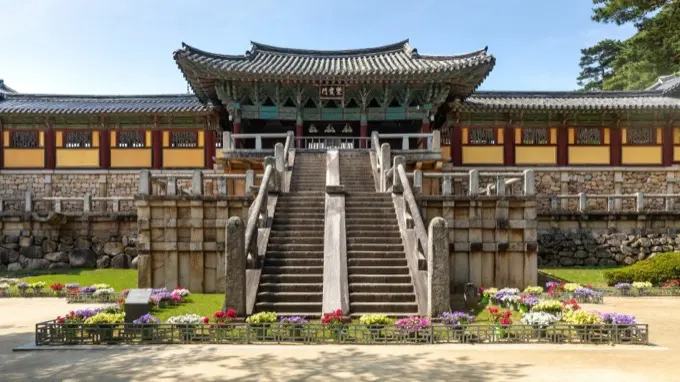
Seokguram Grotto and Bulguksa Temple 석굴암과 불국사
Sculpture and Architecture that Represent the Buddhist Culture of the Unified Silla Period
Both masterpieces were created between 751 and 774 by Kim Dae-seong, prime minister of Silla, on the slopes above Gyeongju. Seokguram is a granite grotto assembled with astonishing mathematical precision around a serene seated Sakyamuni, his hand touching the earth among 38 carved figures. Down the mountain, Bulguksa, the temple imagined as the Buddha Land, pairs bold stone stairway bridges with the famously mismatched Dabotap and Seokgatap pagodas, a deliberate harmony of contrasts.
- Hours
- 09:00-17:00 (Year-round)
- Fee
- 6,000won each
- Getting there
- Bulguksa: Bus no. 11 (15 minutes) from Bulguksa Station; Seokguram: Bus no. 12 (20 minutes) from Bulguksa Temple
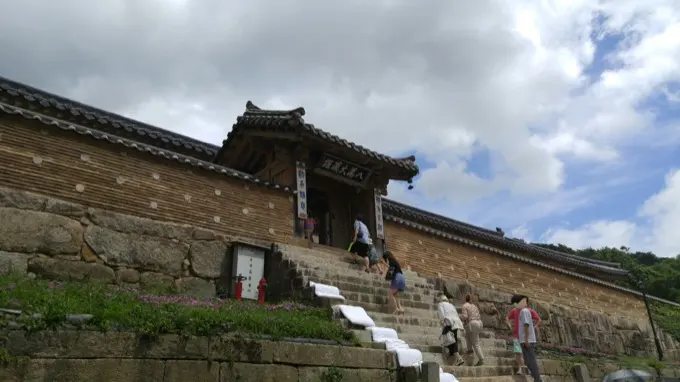
Haeinsa Temple Janggyeong Panjeon, the Depositories for the Tripitaka Koreana Woodblocks 해인사 장경판전
Depositories that Perfectly Preserved the Printing Woodblocks of the Tripitaka Koreana
High on Gayasan Mountain at Haeinsa Temple, these plain wooden halls built around the 15th century have kept more than 80,000 Tripitaka Koreana printing woodblocks in perfect condition for over 700 years. Their secret is brilliantly simple engineering: latticed windows of different sizes front and back, and floors dug deep and layered with charcoal, clay, sand, salt and lime to manage light, airflow and humidity without a single machine. It is a rare case of a World Heritage building protecting a Memory of the World treasure inside.
- Hours
- 08:30-18:00
- Fee
- 3,000won
- Getting there
- 1-hour taxi from Daegu Seobu Intercity Bus Terminal
 Inscribed 2018
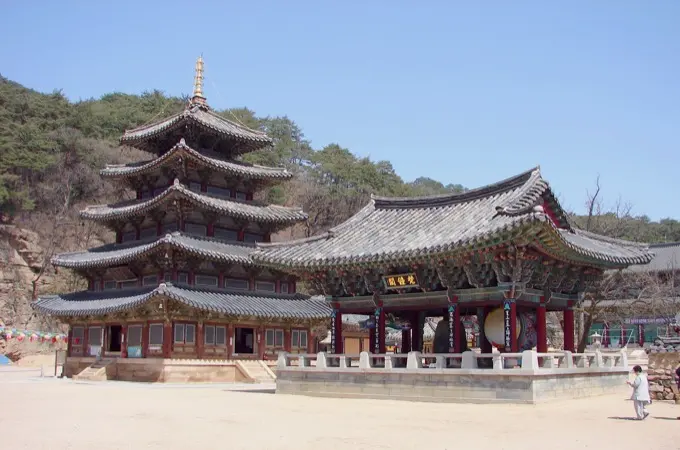
 Sansa, Buddhist Mountain Monasteries in Korea 산사, 한국의 산지 승원
Seven Places that Show the True Character of Buddhism in Korea
Seven mountain temples founded between the 7th and 9th centuries (Tongdosa, Buseoksa, Bongjeongsa, Beopjusa, Magoksa, Seonamsa and Daeheungsa) joined the World Heritage list together in 2018. While city temples vanished under the Buddhism-suppressing Joseon Dynasty, these mountainside monasteries kept their original roles, folding halls and pagodas into the slopes and valleys without reshaping the land around them. They are still living places of practice: monks retreat for three-month Angeo meditation seasons and keep the tradition of ullyeok, communal work that treats sweeping the courtyard as part of the spiritual life. Each temple has its own claim to fame, from Korea's oldest wooden building at Bongjeongsa to the last remaining wooden pagoda at Beopjusa.
- Fee
- Tongdosa 3,000won | Buseoksa 2,000won | Bongjeongsa 2,000won | Beopjusa 4,000won | Magoksa 3,000won | Seonamsa 2,000won | Daeheungsa 3,000won
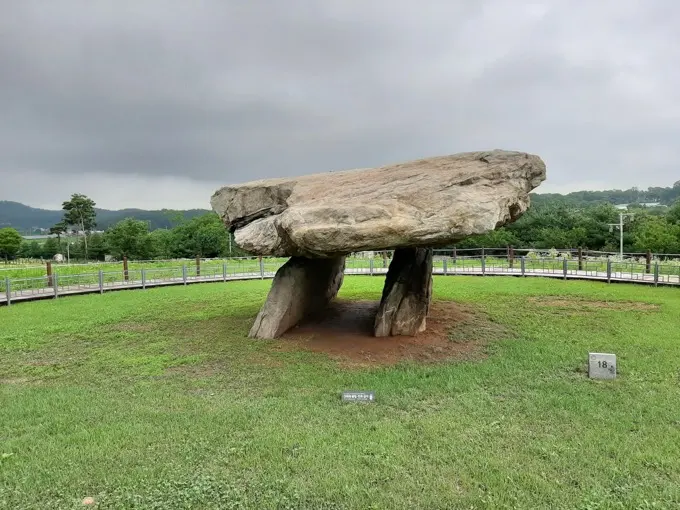
Gochang, Hwasun and Ganghwa Dolmen Sites 고창, 화순, 강화의 고인돌 유적
The Key to the Secret of Megalithic Culture of the Prehistoric Ages
Built around 1000 BCE, these Bronze Age stone tombs are Korea's window into prehistoric megalithic culture, and the numbers are staggering: of roughly 50,000 dolmens worldwide, more than 30,000 stand on the Korean Peninsula. The three sites show the full story, from quarrying and transport to construction, with 447 dolmens packed into a 1.8 km stretch at Gochang alone and 596 clustered along the Hwasun valley. Ganghwa holds the country's largest table-type dolmen, its capstone measuring 7.1 by 5.5 meters and hovering 2.6 meters above the ground like a giant stone table left behind by the ancients.
- Hours
- Gochang Dolmen Museum 09:00-18:00 (Closed on Mondays, and January 1)
- Fee
- Dolmen sites Free | Gochang Dolmen Museum 3,000won
- Getting there
- Gochang: 10-minute taxi from Gochang Bus Terminal | Hwasun: 20-minute taxi from Hwasun Station | Ganghwa: 15-minute taxi from Ganghwa Terminal
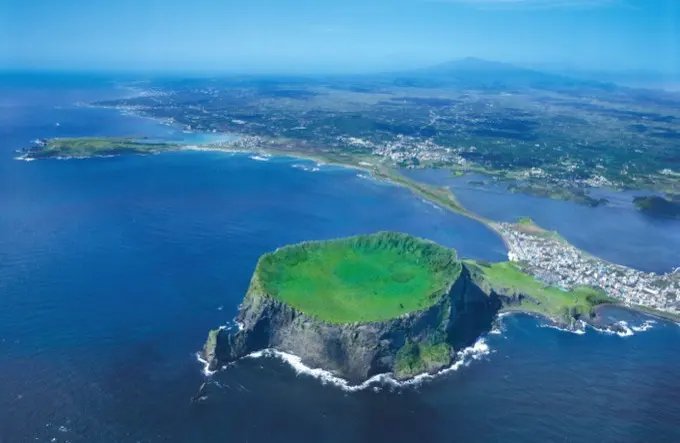
Jeju Volcanic Island and Lava Tubes 제주 화산섬과 용암 동굴
Mysteries of the Underground and Aboveground Created by Volcano and Time
Jeju was forged by eruptions between roughly 1.2 million and 250,000 years ago, and the World Heritage listing covers its three showpieces: Hallasan Mountain, the 1,947 m peak at the island's heart with over 1,800 plant species; Seongsan Ilchulbong, a crater-topped tuff cone that rose from an underwater eruption and later joined the island by sandbank; and the Geomunoreum Lava Tube System. Down in the tubes, Manjanggul stretches a world-class 7.4 km, while Yongcheondonggul and Dangcheomuldonggul are lined with calcium carbonate formations so rich that scientists call them the most developed of their kind anywhere. Above ground or below, it is the story of the Earth written in lava.
- Hours
- Seongsan Ilchulbong 07:00-20:00 | Manjanggul Cave 09:00-18:00 (Closed on first Wednesday of every month)
- Fee
- Seongsan Ilchulbong 5,000won | Manjanggul Cave 4,000won | Hallasan Free
- Getting there
- Seongsan Ilchulbong: 1.5-hour taxi from Jeju International Airport | Manjanggul Cave: 50-minute taxi from Jeju International Airport | Hallasan: 30-minute taxi from Jeju International Airport
 Inscribed 2021
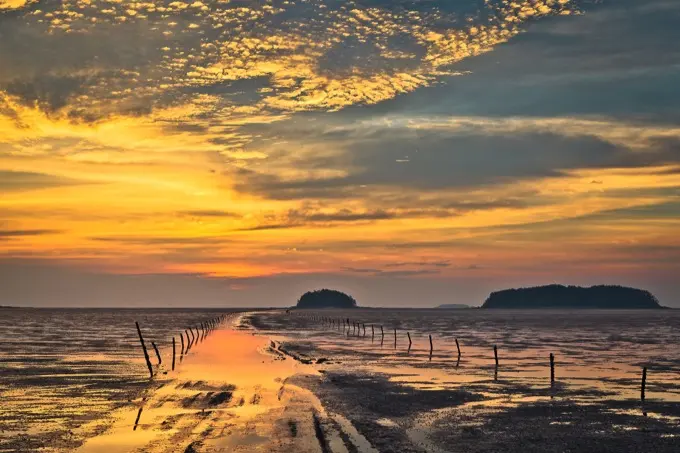
 Getbol, Tidal Flats in Korea 한국의 갯벌
Rich Repository of Biological Diversity where Migratory Birds Find Food and Rest
Inscribed in July 2021, Korea's getbol is a serial site of four southwestern tidal flats: Seocheon, Gochang, Sinan and Boseong-Suncheon. Often called the kidneys of the sea for filtering pollutants before they reach the ocean, these mudflats shelter more than 2,150 species and serve as a vital refueling stop on the East Asian-Australasian flyway, where over a million long-distance migratory birds of 300-plus species pause each year. Sinan is the largest, with mud layers 40 meters thick, while Suncheon's vast reed beds give the marsh its outstanding natural beauty. Come at low tide and the sea floor unrolls into a living, breathing landscape.
- Hours
- Seocheon Bird Village 10:00-18:00 (Closed on Mondays, Seollal & Chuseok holidays) | Gochang Tideland Experience Center 09:00-17:00 (Closed on January 1, Seollal & Chuseok holidays) | Shinan Getbol Center 09:00-17:00 (Closed on Mondays) | Suncheonman Wetland 08:00-sunset
- Fee
- Seocheon Bird Village 1,500won | Gochang Tideland Experience Center 12,000won | Shinan Getbol Center Free | Suncheonman Wetland 8,000won
- Tours
- Suncheonman National Garden (SkyCube in frequent service / Closed on Mondays and the day after holidays)
Intangible Cultural Heritage 인류무형문화유산
Living traditions you can still see performed: royal rituals, mask dances, wrestling, kimchi-making and the lantern festival.
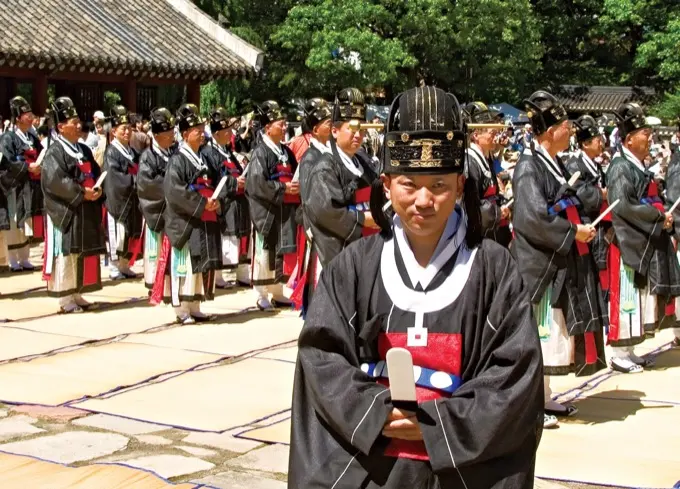
Royal Ancestral Ritual in the Jongmyo Shrine and its Music 종묘제례 및 종묘제례악
Sincere Devotion, Dance and Music Offered to Ancestors at Jongmyo Shrine
For more than 500 years, kings of the Joseon Dynasty and their descendants have honored their royal ancestors with this solemn national rite at Jongmyo Shrine, welcoming the spirits, entertaining them, and sending them off again. The ceremony unfolds to Jongmyo Jeryeak, ritual music led by stone chimes and carillons, while 64 dancers in eight rows move in simple, powerful formations carrying flutes and wooden swords. Rooted in Confucian filial piety, it is often described as a complete work of art in which architecture, music and dance come together. You can watch the reenactment yourself each May and November.
- Hours
- 09:00-18:00 (Weekdays open for guided tours in English, Japanese and Chinese; Saturdays and national holidays open for regular admission. Closed on Tuesdays.)
- Tours
- Royal Ancestral Ritual in the Jongmyo Shrine held annually on the first Sunday of May and the first Saturday of November
- Getting there
- 5-minute walk from Exit 11 of Jongno 3-ga Station, Subway Line 1, 3 or 5
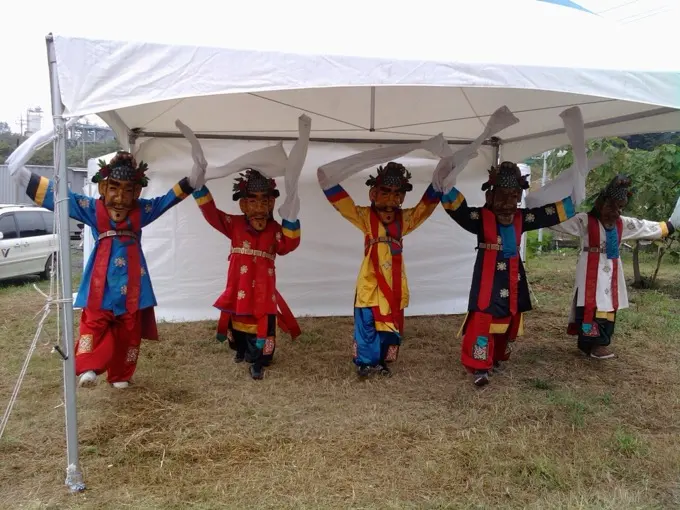
Cheoyongmu 처용무
Majestic and Lively Masked Dance of the Royal Court to Ward off Evil
Cheoyongmu is the royal court's masked dance for chasing away evil and praying for peace, born from the Silla legend of Cheoyong, who drove off a plague god not with force but by singing and dancing. Five dancers in white, blue, black, red and yellow embody the five directions of the compass, moving to the logic of yin-yang and the Five Elements. Look closely at the red-faced masks: each is crowned with peony blossoms for wealth and a branch of seven peaches to repel misfortune. It was the only court dance ever performed in masks, and after a brief pause in the 1910s it has been danced continuously since the late 1920s.
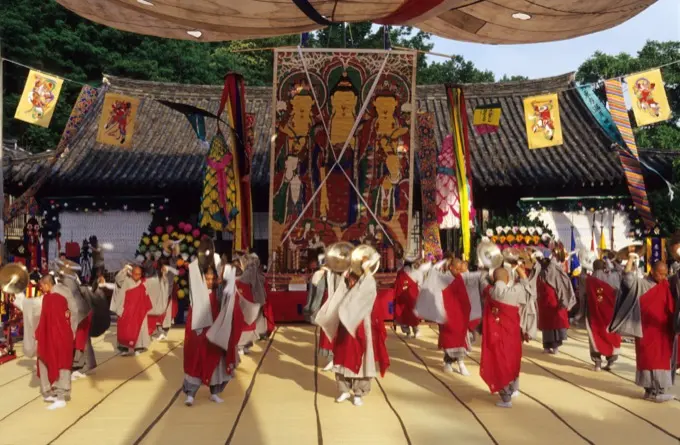
Yeongsanjae 영산재
A Buddhist Ritual Held to Wish a Spirit's Easy Passage into Eternity
Yeongsanjae is a grand Buddhist ceremony that recreates the Vulture Peak Assembly, the Buddha's sermons in India, to guide departed spirits gently toward the heavens. A towering painting of the assembly is hung outdoors, a three-tier altar is raised, and the day fills with Beompae ceremonial song and ritual dances such as Barachum and the drum dance Beopgochum. Once a three-day affair, today's Yeongsanjae distills that devotion into a single, unforgettable day, reenacted every June 6 at Bongwonsa Temple in Seoul.
- Tours
- Reenactment of Yeongsanjae annually on June 6
- Getting there
- Bus no. 7024 (15 minutes) from Exit 4 of Sinchon Station, Subway Line 2
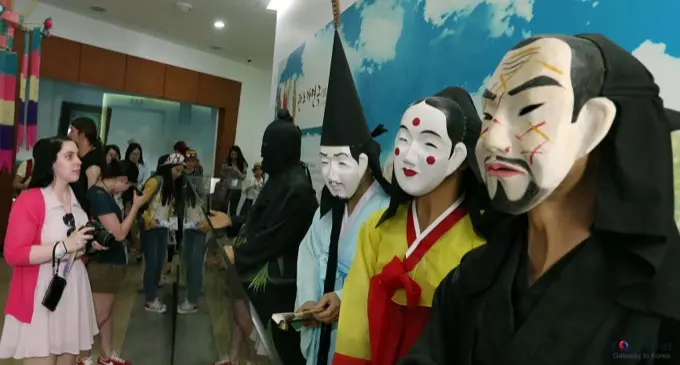
Gangneung Danoje Festival 강릉단오제
A Ritual Wishing for a Fruitful Harvest, and a Feast Everyone Can Enjoy
Every year from April 5 to May 7 of the lunar calendar, the east-coast city of Gangneung throws Korea's great Dano festival, praying for safe mountain passage, a rich harvest and a bountiful fishing season. Sacred liquor is brewed, a holy tree called the sinmok is carried down from Daegwallyeong, and the celebration blends Confucian rites, shamanic gut rituals and the Gwanno Mask Drama once performed by government servants. Add swings, ssireum wrestling and Nanjang, the country's largest outdoor market, and you have a festival where Confucianism, Shamanism, Buddhism and Taoism mingle with pure fun, still run by the voluntary hands of local residents.
- Hours
- Annually on May 5 of the lunar calendar
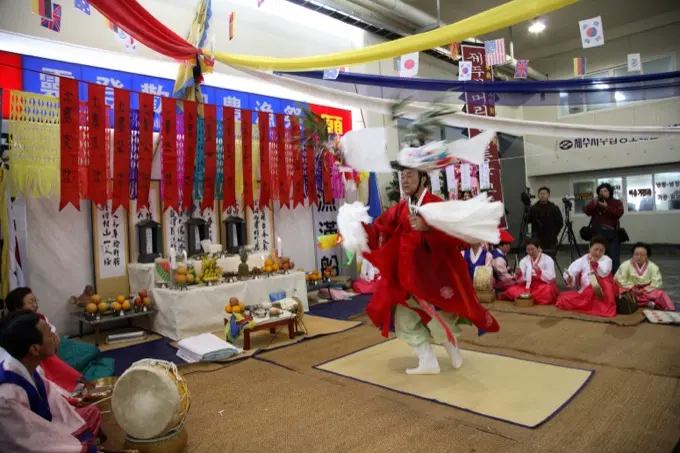
Jeju Chilmeoridang Yeongdeunggut 제주 칠머리당 영등굿
A Grand Festival of Women Divers Held for Yeongdeung Halmang, the Goddess of Wind
When the goddess of wind, Yeongdeung Halmang, visits Jeju each lunar February, the island's roughest sea weeks are met with this shamanistic ritual at Chilmeoridang Shrine in Geonip-dong. Over two weeks the shaman welcomes the goddess, invites all 18,000 deities said to dwell on Jeju, and prays for calm villages and full nets, while haenyeo women divers scatter seeds of the fisheries into the ocean. The most charming moment is Yeonggam Nori, a playful interlude with a goblin, before the goddess is sent home on a little boat of straw. It is Jeju's haenyeo culture and folk religion distilled into one windswept festival.
- Hours
- 09:00-17:00
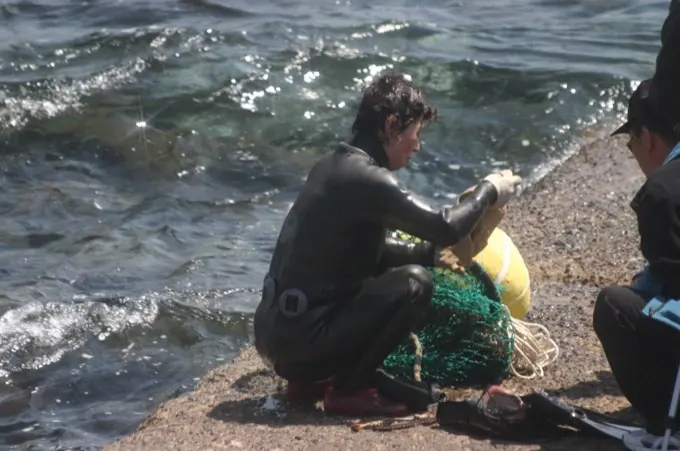
Culture of Jeju Haenyeo (Women Divers) 제주해녀문화
Jeju Haenyeo, the Best Rough Sea Divers
The haenyeo of Jeju are women who free-dive more than 10 meters without oxygen masks, harvesting abalone, sea urchins and other seafood as their mothers and grandmothers did before them. Their craft, called muljil, is announced by the whistling sumbi sori breath they release on surfacing, and it is passed down through a tight community that shares wisdom, safety and profits alike. Divers are ranked into high, middle and low groups, with the most skilled staying under for over two minutes, and all follow strict eco-friendly rules on when and how much to catch. Each lunar March 8 they gather for Jamsugut, a shamanic ritual for a safe season, singing haenyeo songs together.
- Hours
- 09:00-18:00 (Closed on Mondays, January 1, and Seollal & Chuseok days)
- Fee
- 1,100 won
- Getting there
- 1-hour taxi from Jeju International Airport
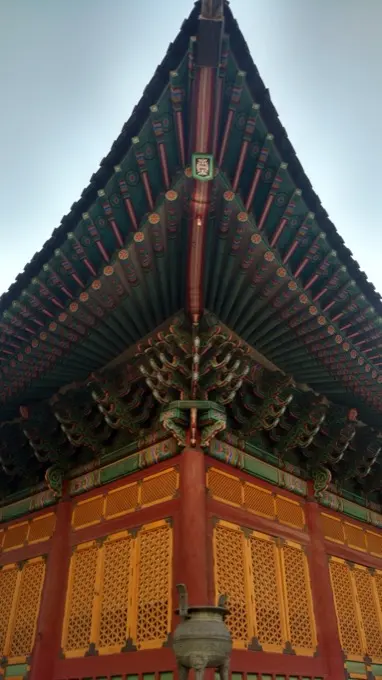
Daemokjang, Traditional Wooden Architecture 대목장, 한국의 전통 목조건축
Master Craftsmen in Charge of Building Palace and Temple Architectures
A daemokjang is the master carpenter who leads the building of Korea's grand wooden structures, from palace halls to temple pavilions, taking responsibility for everything from choosing the timber to the finished roof. Only three such masters remain in Korea today, their skills earned through decades of hands-on training. The craft is steeped in respect for nature: building sites were chosen by pungsujiri, Korean geomancy, and a ritual once sought nature's permission before a tree was felled. World Heritage landmarks like Changdeokgung Palace and Bulguksa Temple rose under daemokjang supervision.
- Hours
- 09:00-18:00 (Closed on Mondays)
- Fee
- Free
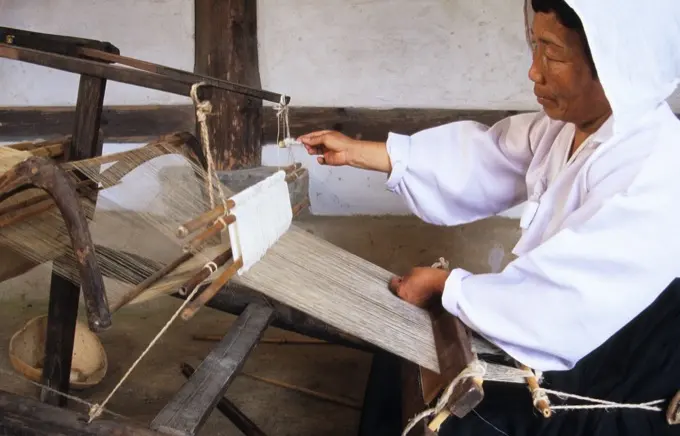
Weaving of Mosi (fine ramie) in the Hansan Region 한산 모시짜기
Cool Fabric Woven by More Than 100,000 Helping Hands
In the Hansan region of Seocheon-gun, women have long woven mosi, a fine ramie cloth so cool and elegant that it has been exported to China and Japan since the Three Kingdoms period. The plant's inner fibers are peeled, soaked, split and pieced into thread entirely by hand before the loom ever comes into play, and the weaving itself happens in a humid dugout hut because dry air makes the delicate cloth rip. Even a skilled weaver needs a full three months for one roll, which is why village women traditionally worked together and turned mosi into a vital household income.
- Hours
- 10:00-18:00 (Year-round)
- Fee
- Free
- Tours
- Hansan Ramie Cultural Festival: around Hansan Mosi Museum, annually on June, hansanmosi.kr (Korean only)
- Getting there
- 5-minute taxi from Hansan Terminal
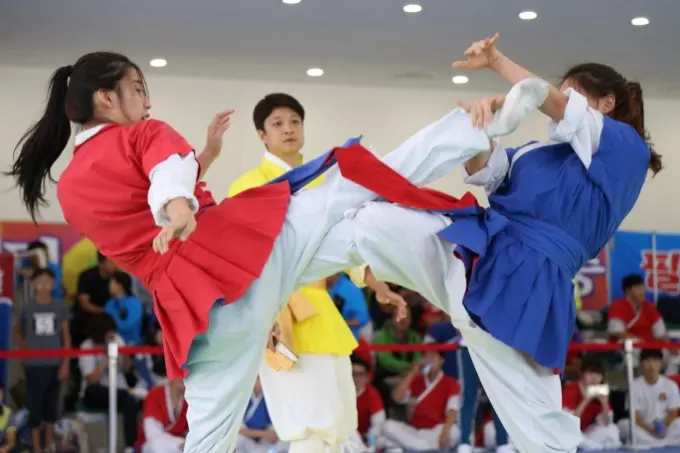
Taekkyeon, Traditional Korean Martial Arts 택견, 한국의 전통무술
Martial Art of Movements Smooth as Dancing and Fast as Lightning
Taekkyeon is Korea's traditional martial art of flowing, rhythmic movements and sudden, lightning-fast kicks, and a mural resembling its moves was found in a Goguryeo-era tomb, proof of thousands of years of practice. Performed barehanded with no equipment, it looks almost like dance, and it prizes spiritual training over the forceful defeat of an opponent. Villages once squared off in taekkyeon competitions on holidays like Dano and Chuseok, so the art doubled as community glue, passing down values of putting others before yourself.
- Hours
- 09:00-17:00
- Fee
- Free (additional experience fees apply)
- Tours
- Chungju World Martial Arts Museum: 24 Namhangang-ro, Chungju-si, 043-848-8483, 09:00-18:00 (Closed on Mondays, January 1, and Seollal & Chuseok days), Free. Chungju World Martial Arts Festival: around the World Martial Arts Park, annually in August-September, www.martialarts.or.kr
- Getting there
- 10-minute taxi from Chungju Station
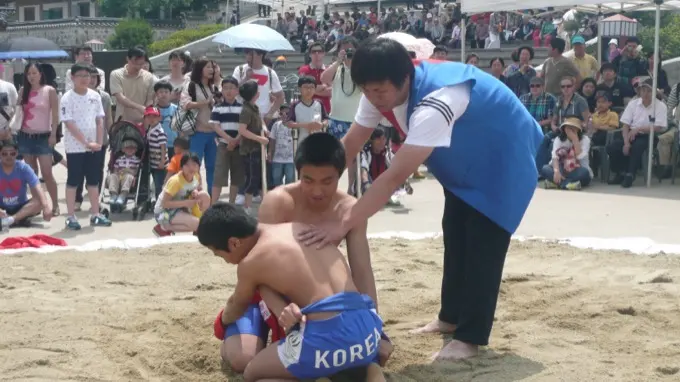 Inscribed 2018
 Traditional Korean Wrestling (Ssireum) 한국의 전통 레슬링(씨름)
A Ground Filled with Strength, Techniques and Excitement
Ssireum is Korea's beloved folk wrestling: two competitors grip each other's satba, a fabric belt wrapped around the waist and one thigh, and try to force any part of the opponent above the knee onto the sand. A mural in a 4th-century Goguryeo tomb shows the sport already underway, and Goryeo and Joseon kings awarded prizes to champions, traditionally a bull that the winning Jangsa paraded around the village. In a rare moment of unity, South and North Korea had it inscribed jointly by UNESCO in 2018.
Falconry, a Living Human Heritage 매사냥, 살아있는 인류 유산
A Hunting Method of Taming and Handling One of the Fiercest Bird
Falconry, the art of taming birds of prey to hunt wild game like pheasants, goes back more than 4,000 years and appears in Korea's Goguryeo tomb murals; during Goryeo and Joseon a government agency even employed officers called Eungsa to oversee it. Korean falconers attach a sichimi, a tag bearing the owner's name and address, so a falcon that flies off can be returned home. Korea joined ten other nations in the joint UNESCO listing of 2010, a shared heritage that grew to 13 countries in 2013.
- Tours
- Reenactments of falconry held every winter at both Falconry and Falconer's Associations
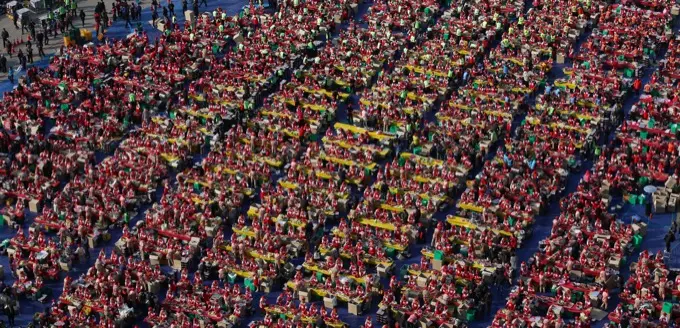
Kimjang, Making and Sharing Kimchi 김장, 김치를 담그고 나누는 문화
Taste of Dozens of Well-fermented Ingredients, Love Shared with the Community
Each late autumn, on a day picked when the weather feels just right, families and whole neighborhoods gather to make winter's worth of kimchi, rubbing a seasoning of radish, green onion, garlic, ginger, chili powder and salted seafood between the leaves of brined napa cabbage. The recipe is a family inheritance passed down the generations, and finished batches are shared with elders and those in need. Kimchi runs so deep in daily life that nearly every household owns a kimchi refrigerator, an appliance that exists only in Korea.
- Hours
- Museum Kimchikan: 10:00-18:00 (Closed on Mondays, January 1, Seollal & Chuseok days, and Christmas) / Kimchi Museum: 10:00-17:30 (Sundays open for reservations only; Closed on Sundays, January 1, and Seollal & Chusok days)
- Fee
- Museum Kimchikan: 5,000won / Kimchi Museum: Free
- Tours
- Refer to Museum Kimchikan website for information on programs offered
- Getting there
- Museum Kimchikan: 10-minute walk from Exit 3-1 of Jonggak Station, Subway Line 1, or Exit 6 of Anguk Station, Subway Line 3 / Kimchi Museum: 20-minute taxi from Gwangju Terminal (U-square) or KTX Gwangju-Songjeong Station
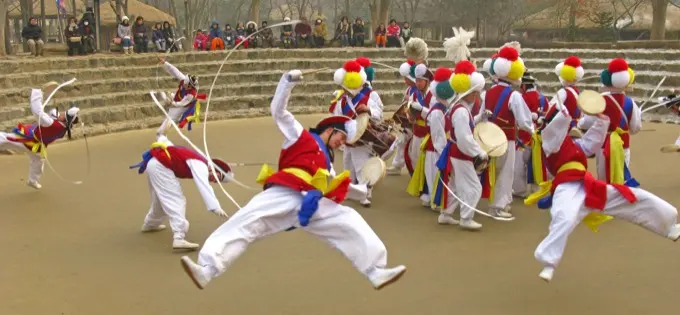
Nongak, Community Band Music, Dance and Rituals in the Republic of Korea 농악
Exhilarating Performing Arts that Lead Village Events and Festivities
Nongak, also known as pungmul, is the rousing band music of Korea's farming villages, where gongs, drums and reed horns once led prayers for safety and a good harvest and kept spirits up through the hard farming season. The small-gong player, called the sangsoe, commands the whole troupe, while dancers whip an 18-meter ribbon through the air from a spinning sangmo hat. Its four core percussion instruments live on in the polished modern stage form known as Samul Nori.
- Tours
- Pilbong Jeongwol Daeboreum Festival annually on Jeongwol Daeboreum (January 15 on the lunar calendar); Pilbong Village Gut Festival annually in mid-August
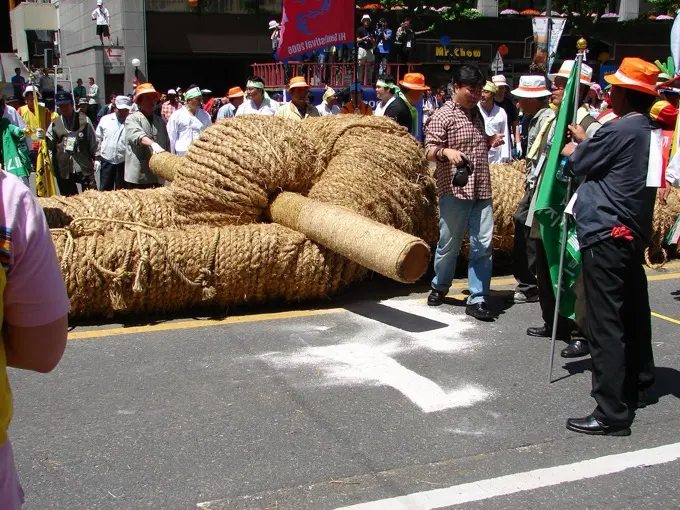 Inscribed 2015
 Tugging Rituals and Games (Juldarigi) 줄다리기
The Great Power of a Rope that Ties a Village Together
On Jeongwol Daeboreum, whole villages divide into two teams to tug an enormous rice-straw rope; the main rope of the Dangjin Gijisi version runs one to two meters thick, 200 meters long and about 40 tons. A male rope is threaded through the loop of a female rope to form a knot called binyeomok, and the contest is quietly run in the female rope's favor, since her victory promises a good harvest. Inscribed jointly with Cambodia, the Philippines and Vietnam in 2015, the game ends with the rope cut in half and shared, wishing everyone a fruitful year.
- Hours
- 10:00-18:00 (Closed on Mondays, Seollal & Chuseok days, and the day after a holiday)
- Fee
- Free
- Tours
- Gijisi Juldarigi Festival: around Gijisi-ri, Songak-eup, Dangjin, annually in early March of the lunar calendar
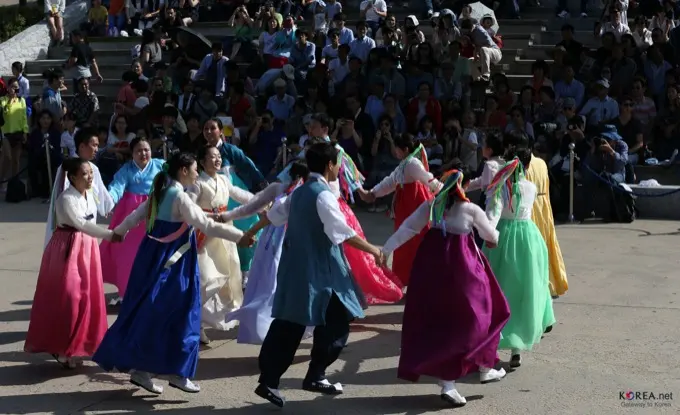
Ganggangsullae 강강술래
A Sense of Freedom and Unity Felt while Cavorting Under the Full Moon
Under the full moon of Chuseok, women join hands in a great circle to sing and dance the night away, in what remains the only Korean group dance performed while holding hands. Legend holds that Admiral Yi Sun-sin had women circle a hillside during the Japanese invasions of the 1590s so his outnumbered army would look vast to enemies watching from afar. The song builds from a slow tune through medium to a breathless fast one, weaving in playful figures like the tortoise game and herring-tying that mirror farming and fishing village life.
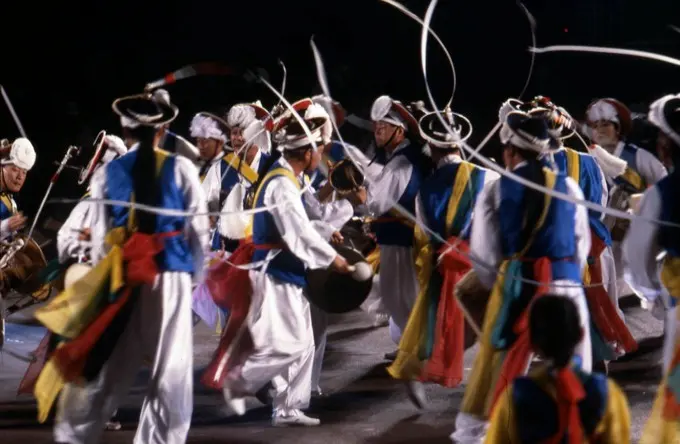
Namsadang Nori 남사당놀이
Nomadic Entertainers Who Dance, Sing and Perform Acrobatic Feats
Namsadang Nori was the traveling variety show of late-Joseon Korea, staged outdoors by nomadic male troupes of some 40 to 50 performers who opened each visit with a prayer for the village's peace and prosperity. A leader called the kkokdusoe steers six episodes, from farmers' band music and dish spinning to tightrope acrobatics, a mask play and a puppet show. Beneath the laughs ran sharp satire that spoke for women and the lower classes, and you can still catch regular weekend performances at the troupe's home base in Anseong.
- Hours
- March-November
- Fee
- 10,000won
- Tours
- Regular performances Saturdays 16:00-18:00 & Sundays 14:00-16:00
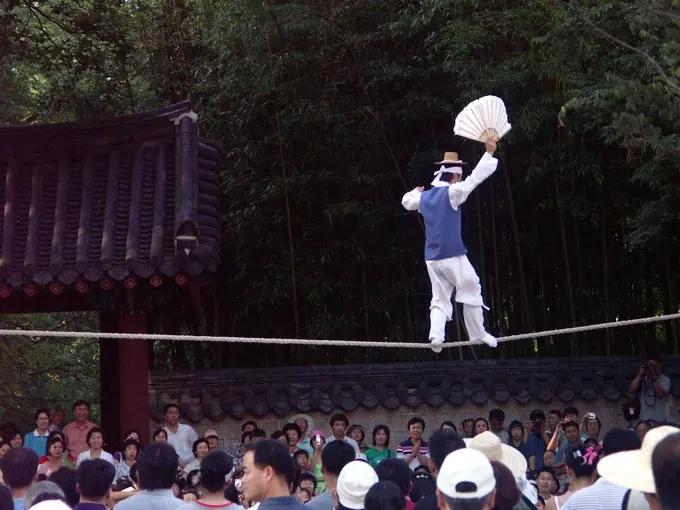
Jultagi, Tightrope Walking 줄타기
Dancing, Talking and Performing Somersaults on a Tightrope
Korean tightrope walking is a conversation as much as a stunt: the julgwangdae trades jokes with a clown on the ground while singing, dancing and somersaulting on the rope, backed by a live band of drum, flute and fiddle. Records trace the art to the Goryeo period, and a master can play for hours aloft, running through more than 40 feats with names like Heogung Jaebi, a jump into two 180-degree somersaults. The secret is the rope itself: unlike the taut metal wires used elsewhere, Korea's elastic rope lets the performer soar off the rebound.
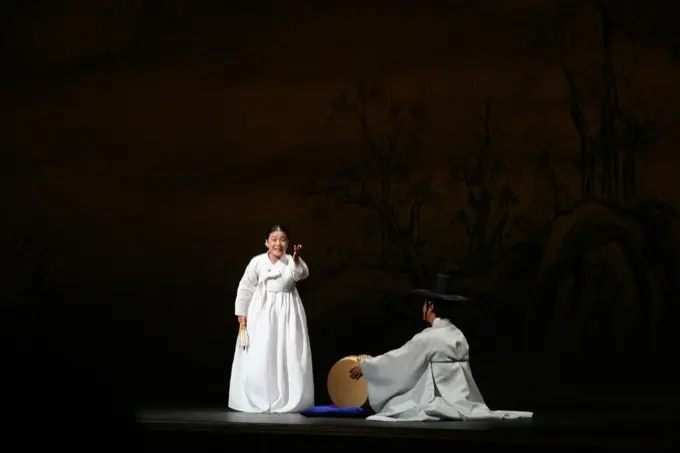
Pansori, Epic Chant 판소리
One-person Opera Created by the Sound, Drum Beats and Response of the Audience
Pansori is Korea's one-person opera: a lone sorikkun weaves song, spoken narration and gesture into an epic tale, driven only by a gosu beating a barrel drum. Hugely popular by the 19th century with intellectuals and commoners alike, the repertoire settled into five great stories of filial piety, loyalty and love, among them Simcheongga and Chunhyangga. A single story can take up to eight hours to complete, which is why a singer's distinctive timbre is forged through years of intensive training.
- Hours
- Jeonju Daesaseup 09:00-18:00 (Closed on Mondays) / Gochang Pansori Museum 09:00-18:00 (Closed on Mondays, January 1, and Seollal & Chuseok holidays) / Park Dongjin Pansori Exhibition Hall 09:00-18:00 (Closed on Sundays and Mondays)
- Fee
- Free (Jeonju Daesaseup, Gwangju Culture & Art Center)
- Tours
- Performances: Jeonju Daesaseup Wednesdays 18:00 & Saturdays 17:00; Gwangju Culture & Art Center Tuesdays-Saturdays at 17:00
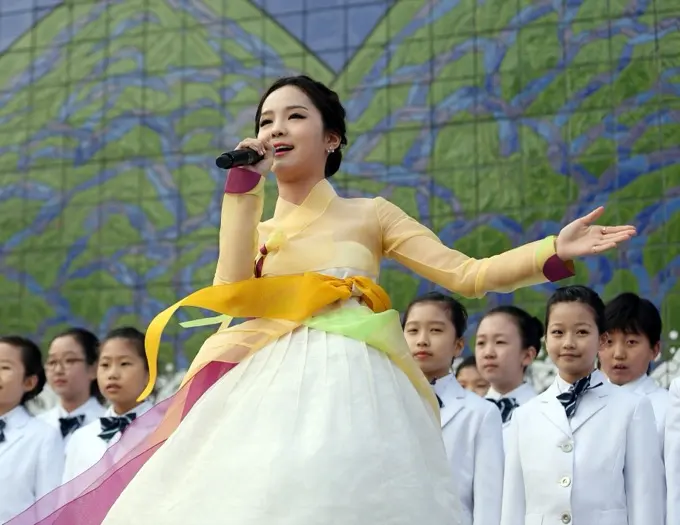
Arirang, Lyrical Folk Song in the Republic of Korea 아리랑, 한국의 서정민요
A Song Recreated and Reinterpreted Numerous Times, and Sung by the Korean People for a Very Long Time
Arirang is less one song than a living chorus of the Korean people: over 60 types and some 3,600 folk songs share its simple refrain, and anyone can add a verse of their own. Spread nationwide by professional singers from the mid-19th century and turbocharged by Na Un-gyu's hit 1926 film of the same name, it comforted Koreans forced from their homes through a tumultuous modern history. Today it is fondly called the country's unofficial national anthem, still being reborn in music, cinema, musicals and dance.
- Hours
- Arirang Museum 10:00-18:00 (Closed on Mondays, January 1, and Seollal & Chuseok days) / Miryang Arirang Training Center 10:00-18:00 (Closed on Mondays)
- Fee
- Miryang Arirang Training Center Free
- Tours
- Arirang Museum: Performances offered (2,000won)
- Getting there
- 5-minute taxi from Miryang Intercity Bus Terminal (Miryang Arirang Training Center)
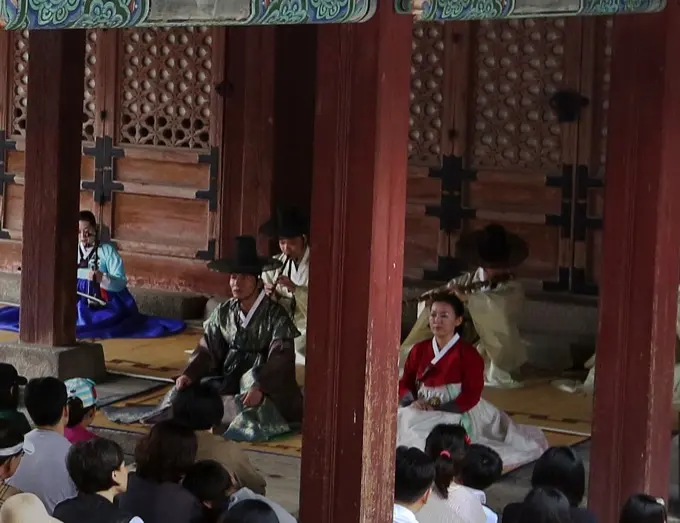
Gagok, Lyric Song Cycles Accompanied by an Orchestra 가곡, 국악 관현반주로 부르는 서정적 노래
Elegant and Peaceful Resonant Song
Gagok sets sijo poetry to the accompaniment of a small traditional orchestra of zithers, bamboo flutes and the two-stringed haegeum. Traced back to the Goryeo period as character-building music for the upper class, it demands remarkable control: singers hold notes with unwavering steadiness through slow 10- and 16-beat cycles, taking up to ten minutes to deliver three short lines. That discipline is the point, and the serene result has been handed down for centuries essentially without modification.
 Inscribed 2020
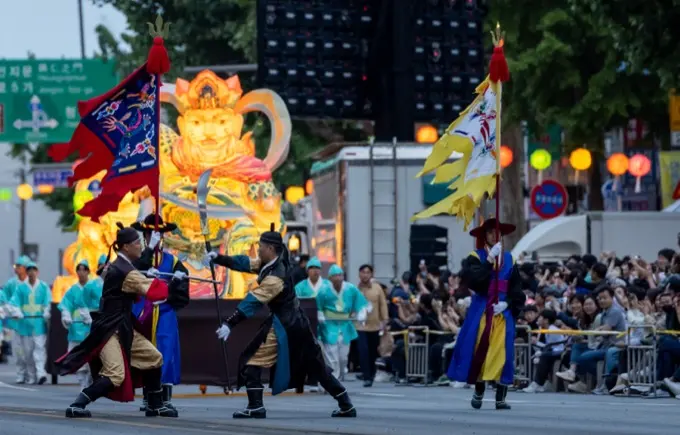
 Yeondeunghoe, Lantern Lighting Festival in the Republic of Korea 연등회, 한국의 등 축제
The Light of Embracement that has been continued for more than a Thousand Years
Every spring around Buddha's Birthday, handmade lotus lanterns of bamboo, wire and traditional paper set Korea's temples and streets aglow, a custom the chronicles trace back to a royal lantern gathering of 886 in the Unified Silla era. Anyone, regardless of race, religion or age, can craft a lantern and join the night parade, and that openness is exactly why UNESCO listed the festival in 2020, praising it for dissolving social boundaries and sharing joy in times of crisis. During the Goryeo era the curfew was even lifted so citizens could climb the fortress walls and watch the capital shine as bright as day.
- Hours
- Annually from late April to mid-May before and after the Day of Buddha's Coming (April 8th of the lunar calendar)
Memory of the World 세계기록유산
Documents that changed history: the oldest movable-metal-type book, five centuries of royal annals, and the alphabet explained by the king who invented it.
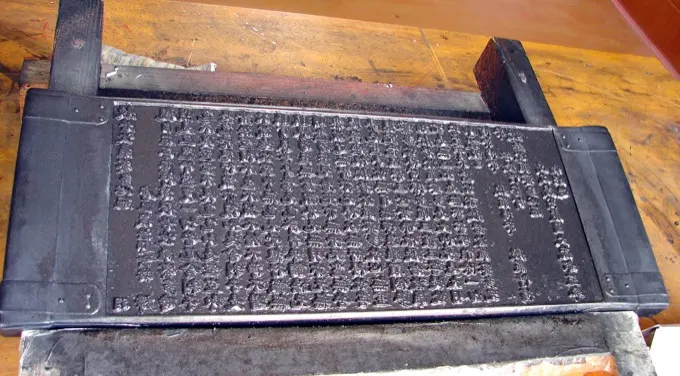
Printing Woodblocks of the Tripitaka Koreana and Miscellaneous Buddhist Scriptures 고려대장경판 및 제경판
Buddha's Preaching Engraved on 81,258 Wooden Blocks
Often called the Eighty-thousand Tripitaka, this is the entire Buddhist canon carved into 81,258 wooden blocks between 1237 and 1248, when Goryeo hoped Buddha's protection would repel the Mongol invasions. It is prized as the oldest and most accurate Tripitaka in existence, made from wood soaked in seawater for three years, steamed, lacquered, and edged with copper to defy time. Stored in the ingeniously ventilated Janggyeongpanjeon depositories at Haeinsa Temple, the blocks remain in such perfect condition after more than 780 years that they can still be printed from today.
- Hours
- Haeinsa Temple 08:30-18:00 / Theme Park 09:00-18:00 (Closed on Mondays)
- Fee
- 3,000won (each)
- Getting there
- 1-hour taxi from Daegu Seobu Intercity Bus Terminal
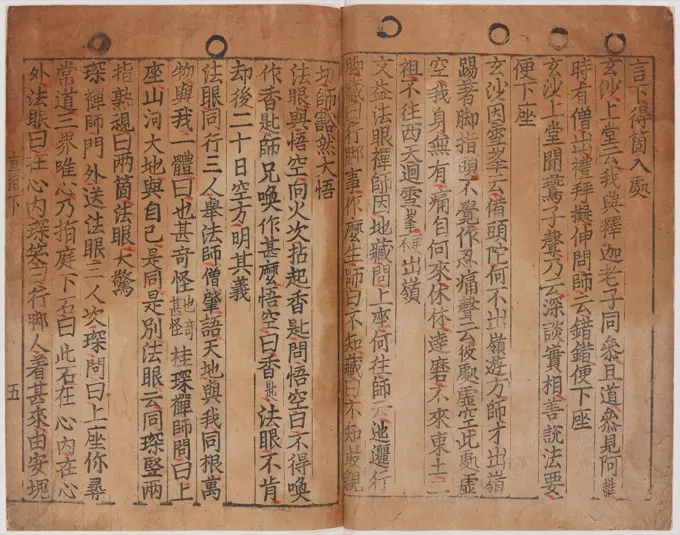
Baegun Hwasang Chorok Buljo Jikji Simche Yojeol (Vol. II), the Second Volume of "Anthology of Great Buddhist Priests' Zen Teachings" 불조직지심체요절 하권
First Book Made Using Metal Type
Printed with movable metal type at Heungdeoksa Temple in Cheongju in 1377, Jikji is the world's oldest metal-print book, beating the Gutenberg Bible by 78 years. It gathers the Zen teachings of Buddha and revered priests as recorded by the Goryeo monk Baegun, and only the second of its two volumes survives. That lone original ended up at the National Library of France, where Korean librarian Dr. Park Byeong-seon spent years proving its identity after it surfaced at a 1972 UNESCO book exhibition.
- Hours
- 09:00-17:00 (Closed on Mondays, January 1, and Seollal & Chuseok days)
- Fee
- Free
- Getting there
- 20-minute taxi from Cheongju Express/Intercity Bus Terminal
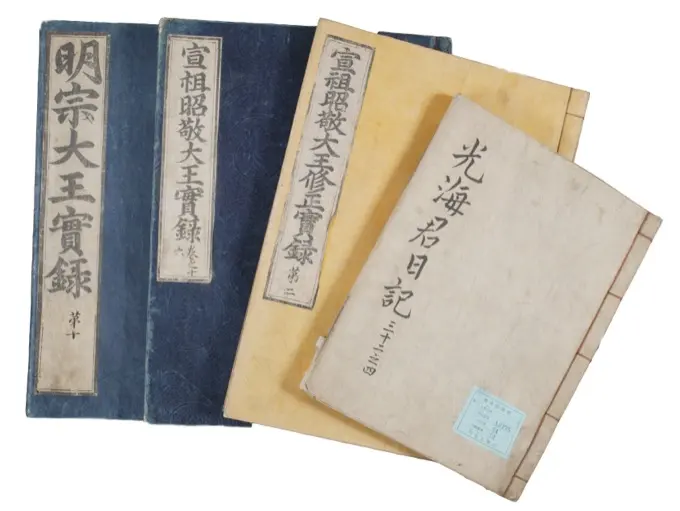
The Annals of the Choson (Joseon) Dynasty 조선왕조실록
The Longest History Book Written for 472 Years
The Joseon Wangjo Sillok chronicles 472 years of the dynasty, from King Taejo to King Cheoljong, across a staggering 1,893 books in 888 volumes covering politics, economy, diplomacy, and daily court life. Independent official historians shadowed the king around the clock, and not even the monarch could read or edit what they wrote; when one embarrassed king ordered a fall from his horse struck from the record, the historian dutifully noted the order itself. Sealed copies were dispersed to mountain archives and aired regularly, keeping the annals in near-perfect condition for centuries.
- Hours
- 09:30-17:30 (Closed on Saturdays, Sundays, and holidays)
- Fee
- Free
- Tours
- Digital tour / sillok.history.go.kr
- Getting there
- Shuttle bus or bus no. 5511 (20 minutes) from Exit 3 of Seoul Nat'l Univ. Station, Subway Line 2
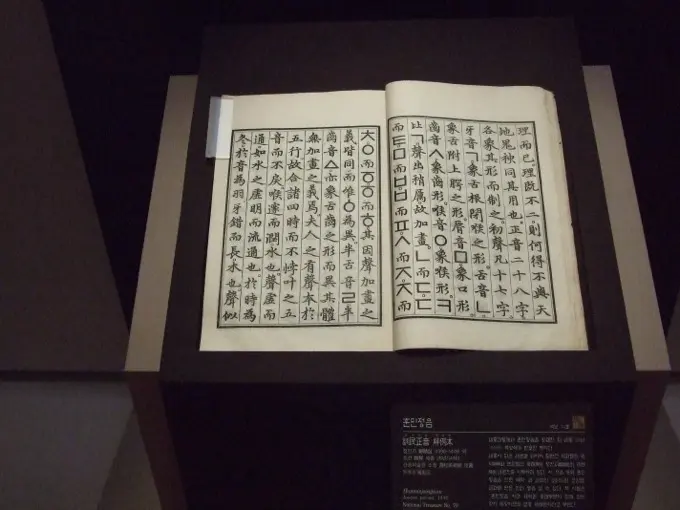
The Hunmin Chongum (Hunminjeongeum) Manuscripts 훈민정음(해례본)
The Book that Explains the Purpose and Principle of Hangeul
This is the book that introduced Hangeul to the world: King Sejong the Great, saddened that his people could not read or write, created a 28-letter alphabet of "proper sounds for the people" and proclaimed it in 1446. The manuscript is the only record explaining exactly how and why each Korean letter was designed, pairing the king's own proclamation with detailed commentaries by his Jiphyeonjeon scholars. It makes Hangeul a rare alphabet whose birth certificate survives, complete with 123 example words showing how the letters combine.
- Hours
- Kansong: Open 2 weeks each in late May and October / The Story of King Sejong: 10:30-19:30 (Closed on Mondays) / National Hangeul Musem: 10:00-18:00 (Closed on January 1, and Seollal & Chuseok days)
- Fee
- Free
- Getting there
- Kansong: 20-minute walk from Exit 5 of Hansung Univ. Station, Subway Line 4 / National Hangeul Musem: 2-minute walk from Exit 2 of Ichon Station, Subway Line 4 or Gyeongui-Jungang Line
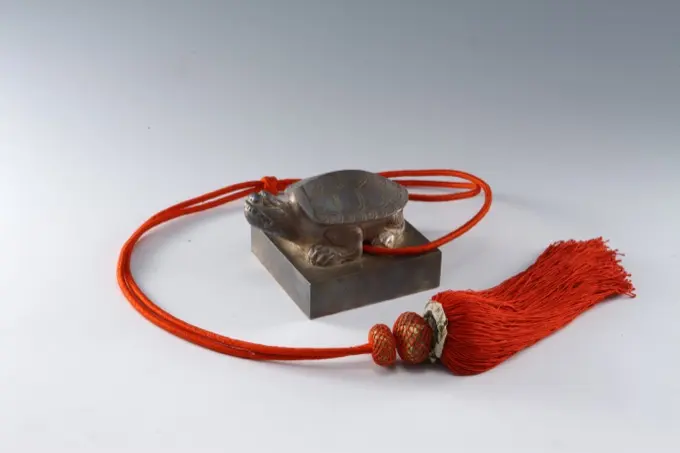
Royal Seal and Investiture Book Collection of the Joseon Dynasty 조선왕실 어보와 어책
Ceremonial Objects that Prove the Legitimacy of the Royal Family
These are the turtle-topped ceremonial seals and engraved investiture books presented at Joseon coronations and royal investitures, produced continuously from 1392 all the way to 1966. The registered collection counts 331 royal seals of gold, silver, and jade alongside 338 volumes of books inscribed on bamboo, jade, and gilt bronze, each extolling the virtues and duties of a king, queen, or crown prince. In life they proclaimed the dynasty's continuity, in death they were enshrined at Jongmyo Shrine beside the royal mortuary tablets, and UNESCO recognized them as the only example of such production sustained for more than 570 years.
- Hours
- National Palace Museum: 10:00-18:00 (Closed on January 1, and Seollal & Chuseok days) / National Museum: 10:00-18:00, Wednesdays and Saturdays 10:00-21:00 (Closed on January 1, and Seollal & Chuseok days)
- Fee
- Free
- Getting there
- National Palace Museum: 10-minute walk from Exit 4 of Gyeongbokgung Station, Subway Line 3, or Exit 1 of Gwanghwamun Station, Subway Line 5 / National Museum: 5-minute walk from Exit 2 of Ichon Station, Subway Line 4 or Gyeongui-Jungang Line
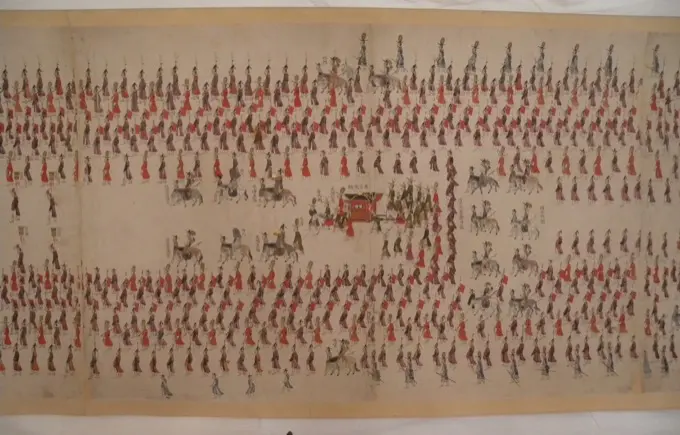
Uigwe: The Royal Protocols of the Joseon Dynasty 조선왕조 의궤
Essence of the Archival Culture of the Joseon Period that Recorded Every Event
The Uigwe are lavishly illustrated manuals that documented every major royal event of the Joseon Dynasty, from coronations and weddings to funerals and the entertaining of foreign envoys. Each volume records the entire production of an event down to staff lists, work assignments, supplies, and expenses, while painted Banchado processions bring the ceremonies vividly to life. Early volumes burned during the Japanese invasions of 1592-1598, yet more than 4,000 books survive, with 2,940 at Seoul National University's Kyujanggak and 490 at the Academy of Korean Studies entered on UNESCO's register.
- Hours
- 09:30-17:30 (Closed on Saturdays, Sundays, and holidays)
- Fee
- Free
- Getting there
- Shuttle bus or bus no. 5511 (20 minutes) from Exit 3 of Seoul Nat'l Univ. Station, Subway Line 2
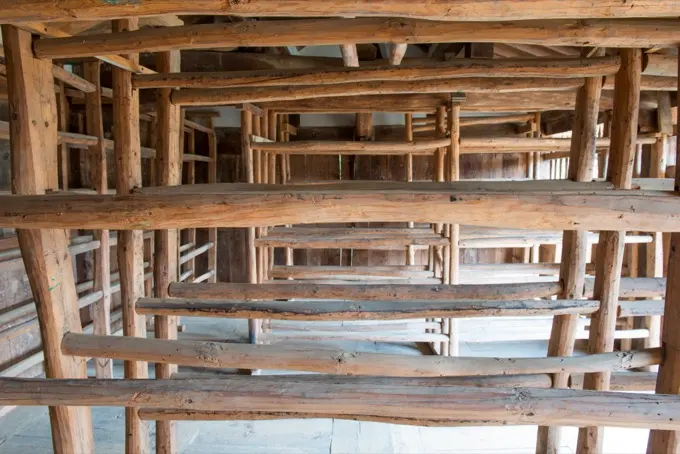
Confucian Printing Woodblocks 한국의 유교책판
More Than 550 Years of Academic Tradition Carved through Collective Intelligence
These are the carved printing blocks Joseon scholars used to publish Confucian writings on politics, society, and literature, gathered through donations from academies and more than 300 families across the country. What makes them remarkable is how they were made: each community debated the content, corrected it through revisions, and shared every cost, a publishing culture run on local consensus for over 550 years. The blocks were engraved on both sides and carefully preserved afterward, so later generations could decide for themselves whether a text deserved reprinting.
- Hours
- 09:00-17:30 (Closed on Mondays)
- Fee
- Free
- Getting there
- 30-minute taxi from Andong Terminal
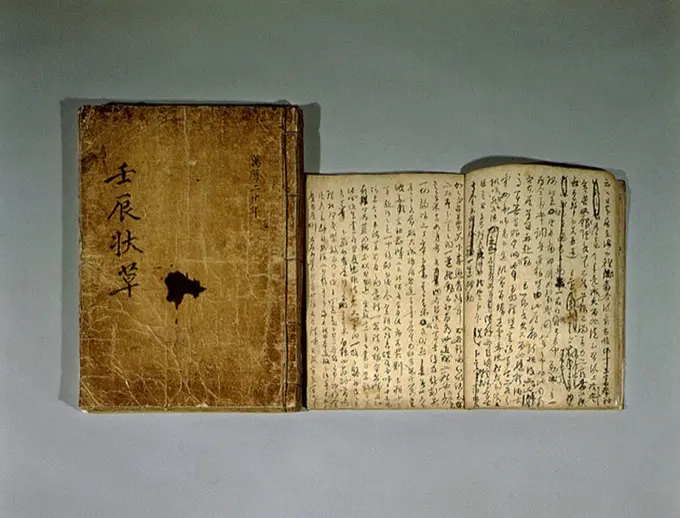
Nanjung Ilgi: War Diary of Admiral Yi Sun-sin 난중일기
Records of the Ever-victorious Great Commander of Naval Battles
This is the actual wartime diary of Admiral Yi Sun-sin (1545-1598), written from January 1592 to November 1598 as he fought off the Japanese invasion at sea, with 205 manuscripts surviving in seven volumes. Few documents anywhere capture a top commander's thoughts in the heat of battle so directly, including his tactics and his famous turtle-shaped armored ship, the Geobukseon. Between the battles you also find weather notes, the daily lives of local residents, and elegantly written poems that readers still admire today.
- Hours
- Hyeonchungsa Shrine 09:00-18:00 (Closed on Mondays); The Story of Admiral Yi Sun-sin 10:30-19:30 (Closed on Mondays)
- Fee
- Free
- Getting there
- 10-minute taxi from Onyangoncheon Station, Subway Line 1 (Hyeonchungsa Shrine)
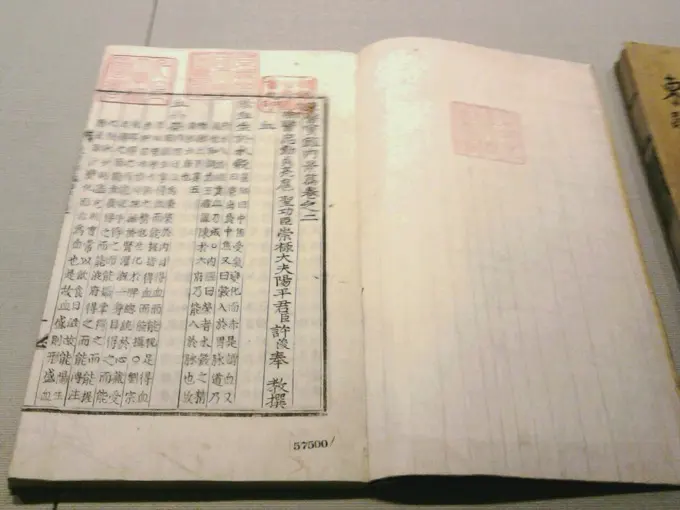
Donguibogam: Principals and Practice of Eastern Medicine 동의보감
Encyclopedia of the Oriental Medicine that First Reflected the Concept of Preventive Medicine
Written between 1596 and 1610 by Heo Jun, physician to two Joseon kings, this 25-volume encyclopedia distilled more than 2,000 years of Korean and Chinese medical knowledge and was printed with wood type in 1613. It was radical for its time in two ways: it championed Yangsaeng, the idea of preventing illness through healthy living rather than just treating it, and it was written largely in Hangeul so ordinary people could look up their own aches and find easy-to-source herbal remedies. It remains the only medical book inscribed in UNESCO's Memory of the World.
- Hours
- 10:00-18:00 (Closed on Mondays, January 1, and Seollal & Chuseok days)
- Fee
- 1,000won
- Getting there
- 10-minute walk from Exit 1 of Gayang Station, Subway Line 9
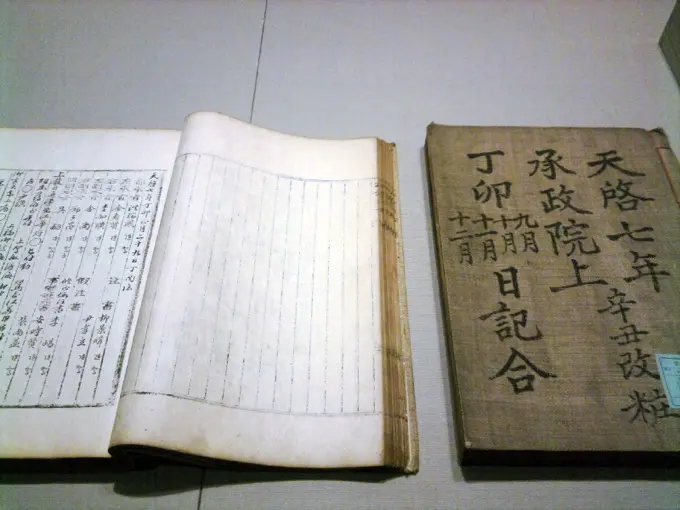
Seungjeongwon Ilgi, the Diaries of the Royal Secretariat 승정원일기
Voluminous Chronicle Comprised of 242.5 Million Characters in 3,243 Volumes
For 288 years, from 1623 to 1910, the king's secretariat wrote down everything: royal discussions with scholars, palace news, the weather, and the day's events, filling 3,243 surviving volumes with a staggering 242.5 million characters. The diarists, called Juseo, shadowed the king to every scheduled event alongside an official recorder, making this the primary raw source behind later histories like the Joseon Wangjo Sillok. Even the covers were made of hemp cloth believed to last a thousand years, chosen so the record itself would outlive its writers.
- Hours
- 09:30-17:30 (Closed on Saturdays, Sundays, and holidays)
- Fee
- Free
- Tours
- Digital tour / sjw.history.go.kr
- Getting there
- Shuttle bus or bus no. 5511 (20 minutes) from Exit 3 of Seoul Nat'l Univ. Station, Subway Line 2
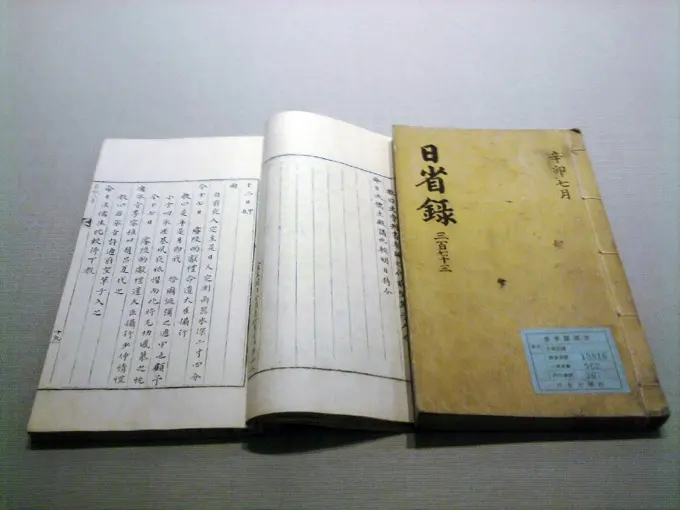
Ilseongnok: Records of Daily Reflections 일성록
King's Diary Reflecting on the Day
Inspired by the Confucian teaching to examine yourself three times a day, King Jeongjo kept a personal diary that he later turned into an official daily log of state affairs, written by scholars at the royal library from 1783 onward. The 2,329 surviving volumes cover 1760 to 1910, sorting each day into eleven areas from the weather to provincial reports, national exams, and criminal cases, arranged by importance rather than by time. It is a rare thing in world history: the private-turned-public diary of autocratic kings, spanning 151 years of rule and full of glimpses into how East met West in the 18th to 20th centuries.
- Hours
- 09:30-17:30 (Closed on Saturdays, Sundays, and holidays)
- Fee
- Free
- Getting there
- Shuttle bus or bus no. 5511 (20 minutes) from Exit 3 of Seoul Nat'l Univ. Station, Subway Line 2
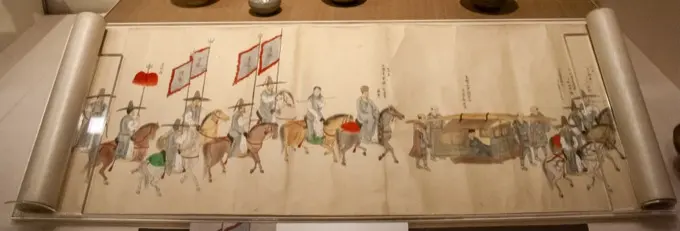
Documents on Joseon Tongshinsa: The History of Peace Building and Cultural Exchanges between Korea and Japan from the 17th to 19th Century 조선통신사에 관한 기록
Peace Building and Cultural Exchanges between Korea and Japan
Between 1607 and 1811, Korea sent twelve grand delegations of 400 to 500 people, the Joseon Tongsinsa, on eight-month journeys from Hanyang to Edo as official goodwill envoys to Japan. This archive of 111 cases and 333 items gathers the documents and paintings born from those missions, from diplomatic papers to the written conversations, calligraphy, and artworks the envoys exchanged with admirers along the route. Jointly listed by Korea and Japan as a symbol of two centuries of peace, the procession still comes back to life each year at the Joseon Tongsinsa Festival held in both countries.
- Hours
- Kyujanggak 09:30-17:30 (Closed on Saturdays, Sundays, and holidays); History Museum 09:00-18:00 (Closed on Mondays, and January 1)
- Fee
- Free
- Getting there
- Kyujanggak: shuttle bus or bus no. 5511 (20 minutes) from Exit 3 of Seoul Nat'l Univ. Station, Subway Line 2; History Museum: 10-minute walk from Exit 2 of Beomil Station, Busan Subway Line 1
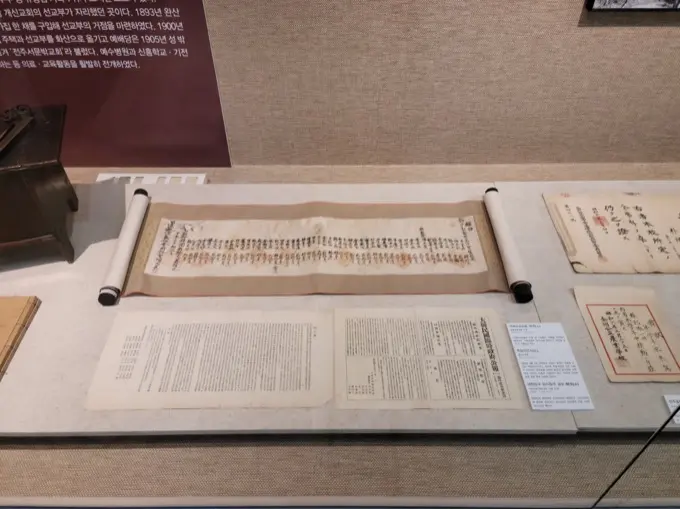
Archives of the National Debt Redemption Movement 국채보상운동 기록물
Voluntary National Movement to Reclaim Sovereignty of the Nation
In February 1907, intellectuals in Daegu called on Koreans to quit smoking and use the savings to pay off the crushing loans Imperial Japan had forced on the country, and the nation answered. About a quarter of all Koreans joined in, from government officials to courtesans and beggars, with women famously donating their rings and jewelry. These 2,475 items of news articles, receipts, and fund-raising ledgers trace a grassroots campaign that inspired similar movements in China, Vietnam, and Mexico, and whose spirit returned in Korea's Gold Collection Movement during the 1997 financial crisis.
- Hours
- 09:00-18:00 (Closed on Mondays, January 1, and Seollal & Chuseok days)
- Fee
- Free
- Getting there
- 10-minute walk from Exit 2 of Jungangno Station, Daegu Subway Line 1, or Exit 1 of Kyungpook Nat'l Univ. Hosp. Station, Daegu Subway Line 2
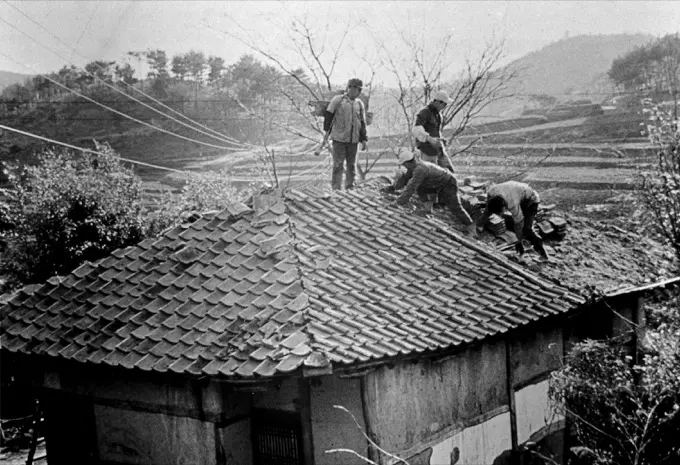
Archives of Saemaul Undong (New Community Movement) 새마을운동 기록물
Rural Development Project that Became the Foundation of Economic Development in Korea
Saemaul Undong, the New Community Movement, began in 1970 with something wonderfully simple: 335 free sacks of cement delivered to each of more than 30,000 villages so residents could fix their own roofs, walls, and roads. Built on the spirit of diligence, self-help, and cooperation, it grew into a nationwide push that trained village leaders, modernized farming, and laid the groundwork for Korea's economic rise while raising the social standing of rural women. The archive preserves over 22,000 records from 1970 to 1979, and more than 53,000 people from 130 countries have since come to Korea to study the movement as a development model.
- Hours
- Saemaul Museum 09:00-18:00 (Closed on Saturdays, Sundays, and Seollal & Chuseok holidays); Cheongdo Memorial Park 09:00-17:00 (Closed on Mondays, and Seollal & Chuseok holidays)
- Fee
- Free
- Getting there
- Saemaul Museum: bus no. Nuri 2 (30 minutes) from Exit 2 of Seohyeon Station, Subway Suin-Bundang Line; Cheongdo Memorial Park: 10-minute taxi from Cheongdo Bus Terminal or Cheongdo Station
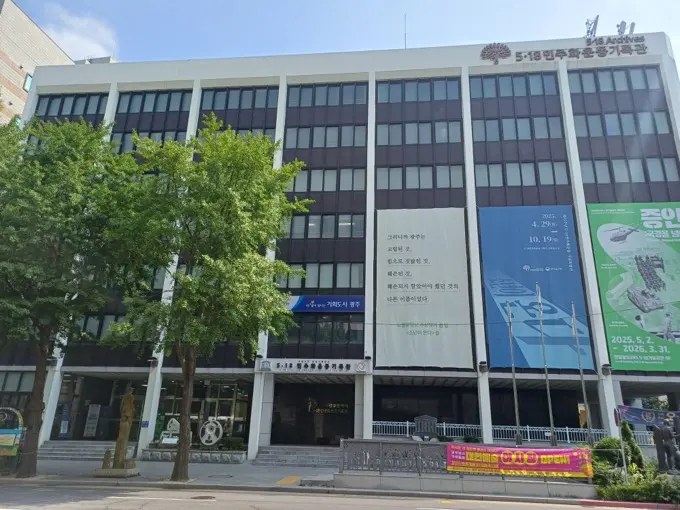
Human Rights Documentary Heritage 1980 Archives for the May 18th Democratic Uprising against Military Regime, in Gwangju 1980년 인권기록유산 5·18민주화운동 기록물
Turning Point in Democracy in Korea, Democratization Movement by Citizens of Gwangju
These archives gather everything generated by the democratization uprising of Gwangju's citizens from May 18 to 27, 1980, when a peaceful protest against a military coup was met with armored vehicles and gunfire. What makes the story extraordinary is the city itself: sealed off by the army, Gwangju's citizens formed a civilian defense and kept impressively democratic public order until the final suppression, which left 165 dead, 76 missing, and 3,383 injured. The records, from fact-finding files to the medical bills of the wounded, trace how a tragedy once branded a riot became the May 18th Democratic Uprising, a touchstone for human rights movements around the world.
- Hours
- 09:00-18:00 (Closed on Mondays, January 1, and Seollal & Chuseok days)
- Fee
- Free
- Getting there
- 5-minute walk from Exit 4 of Geumnam-ro 4-ga Station, Gwangju Subway Line 1
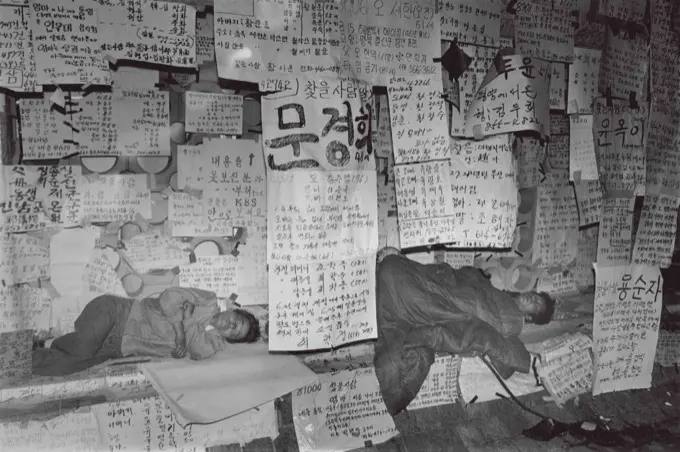
The Archives of KBS Special Live Broadcast "Finding Dispersed Families" KBS특별생방송 「이산가족을 찾습니다」 기록물
Live Television Broadcast that Embraced the Scars of the War
In the summer of 1983, KBS began a live broadcast to reunite families torn apart by colonial rule and the Korean War, and it simply could not stop: the program ran 138 days and 453 hours, from June 30 to November 14. Of the 100,952 families who applied, 53,536 cases went on air and 10,189 relatives found each other, hugging and weeping in front of an entire nation. The 463 original tapes, applications, cue sheets, and reunion photos capture television at its most humane, a broadcast that won the 1984 Gold Mercury International Award and helped open the door to the first South-North family reunions in 1985.
Recommended tour courses
The book’s own heritage itineraries: each chains nearby UNESCO stops into one regional trip.
In search of the lives and styles of the Joseon Dynasty
A palace-hopping walk through Hanyang (now Seoul), the Joseon Dynasty's capital for over 500 years, tracing the lifestyle, philosophy, and history of the era. Tip: a single combined ticket grants admission to the four major palaces (Changdeokgung, Changgyeonggung, Gyeongbokgung, and Deoksugung).
- Jongmyo Shrine
- Changgyeonggung Palace
- Changdeokgung Palace
- Gyeongbokgung Palace
- The Story of King Sejong (Below Gwanghwamun Square)
- Deoksugung Palace
A fortress that protected the capital, a fortress built as filial piety, a fortress that formed a new town
Compare the construction techniques of Namhansanseong and Hwaseong fortresses on the outskirts of Seoul, and visit the royal tomb of Jeongjo, the 22nd Joseon king who planned and built a whole new city.
- Namhansanseong Fortress
- Hwaseong Fortress
- Yungneung and Geolleung Royal Tombs, Hwaseong
- Yongjusa Temple
- Korean Folk Village
An area full of mountains, seas and festivals
Gangwon-do pairs grand mountains and clean East Sea beaches with living heritage: the Arirang folk song that sings the joys and sorrows of life, and the Gangneung Danoje Festival.
- Seoraksan Mountain
- Ojukheon & Municipal Museum, Gangneung
- The Museum of Oriental Embroidery, Gangneung (Artists' Village)
- Gangneung Dano Culture Center
- Arirang Museum, Jeongseon
- Jangneung Royal Tomb, Yeongwol
History tour along the Geumgang River, where the spirit of Baekje can be felt
A drive around the Geumgang River in the midwest of the peninsula, where the capital of the ancient Baekje kingdom stood, taking in the remains of Baekje's glorious culture and history across Gongju, Buyeo, and Iksan.
- Hyeonchungsa Shrine
- Magoksa Temple
- Baekje Historic Areas 1, Gongju (Gongsanseong Fortress; Tomb of King Muryeong and Royal Tombs)
- Baekje Historic Areas 2, Buyeo (Busosanseong Fortress; Jeongnimsa Temple Site)
- Baekje Historic Areas 3, Iksan (Archaeological Site in Wanggung-ri; Mireuksa Temple Site)
- Hansan Mosi (Ramie Fabric) Museum
Travel through time, from the prehistoric era to the 20th century democratic uprising
A time warp from Bronze Age dolmen sites to a 16th-century Neo-Confucian academy and on to the sites of the May 18th Democratic Uprising of 1980 in Gwangju.
- Gochang Dolmen Site (Dolmen Museum)
- Piramseowon Confucian Academy (Jangseong)
- May 18 Memorial Park
- Jeonil Building 245
- Hwasun Dolmen Site
- Unjusa Temple
A calming trip to a mountainside temple
A slow, meditative drive through Jeollanam-do built around sansa, Korea's mountainside temples. Old forests, age-old Buddhist wisdom, and the fragrant scent of tea set the pace, with templestay programs at Songgwangsa, Seonamsa, and Daeheungsa letting you sit quietly in nature, plus a stone-fortress folk village and the wetlands of Suncheonman Bay along the way. A combined admission ticket (12,000won, 2-day) covers the main Suncheon attractions.
- Songgwangsa Temple
- Seonamsa Temple, Suncheon
- Naganeupseong Folk Village
- Suncheonman Bay & Suncheonman National Garden
- Daeheungsa Temple, Haenam
- Usuyeong National Tourist Area, Haenam
Story of the seonbi
This tour follows the world of the seonbi, the Confucian scholars of Joseon, through the Andong and Yeongju region. It pairs Hahoe, a 600-year-old clan village famous for its mask dance, with the great seowon academies including Dosanseowon, built in memory of Yi Hwang, and Sosuseowon, the first royally chartered academy, before finishing at the 7th-century Buseoksa Temple.
- Hahoe Village
- Byeongsanseowon Confucian Academy
- ConfucianLand
- Dosanseowon Confucian Academy
- Sosuseowon Confucian Academy
- Buseoksa Temple
Gyeongju, an ancient capital of a thousand years
Gyeongju was the capital of the Silla Kingdom for more than a thousand years, and this course walks straight through its history. It opens with Bulguksa Temple and Seokguram Grotto, the epitome of Korean Buddhist art, then moves through the open-air Buddhas of Namsan, the royal tombs of Daereungwon, and the aristocratic villages of Yangdong before ending at Oksanseowon academy.
- Bulguksa Temple and Seokguram Grotto
- Gyeongju Historic Areas 1 (Namsan District)
- Gyeongju Historic Areas 2 (Daereungwon District - Wolseong District)
- Yangdong Village
- Oksanseowon Confucian Academy
Love for one's country
A route through Daegu and the surrounding provinces tracing how Koreans fought and overcame national crises through faith and patriotism. It runs from Haeinsa Temple, home of the Tripitaka Koreana woodblocks carved as prayers in wartime, past the memorial park of the citizen-led National Debt Repayment Movement, to Tongdosa Temple, founded in 646 to protect the country.
- Haeinsa Temple
- Dodongseowon Confucian Academy (Dalseong)
- Gukchaebosang Memorial Park (Memorial Museum)
- Daegu Modern Culture Alley
- Tongdosa Temple, Yangsan
A volcanic island, lava tubes and songs of haenyeo
Jeju Island is a jewel created by nature, and this course strings together its volcanic wonders: the sunrise crater of Seongsan Ilchulbong, the 7.4 km Manjanggul lava tube, the dark-soiled Geomunoreum lava tube system, and Hallasan with its summit crater lake. In between, the Jeju Haenyeo Museum tells the story of the island's women free divers and their life with the sea.
- Seongsan Ilchulbong Tuff Cone
- Jeju Haenyeo Museum
- Manjanggul Cave
- Bijarim Forest
- Geomunoreum Lava Tube System
- Jeju World Natural Heritage Center
- Hallasan Mountain
Also on the UNESCO map
Korea’s biosphere reserves and global geoparks, for travelers who want the wild side of the list.
Biosphere reserves
- Seoraksan Mountain Biosphere Reserve (Designated in 1982)
- Jeju Island Biosphere Reserve (Designated in 2002)
- Sinan Dadohae Biosphere Reserve (Designated in 2009)
- Gwangneung Forest Biosphere Reserve (Designated in 2010)
- Gochang Biosphere Reserve (Designated in 2013)
- Suncheon Biosphere Reserve (Designated in 2018)
- Gangwon Eco-Peace Biosphere Reserve (Designated in 2019)
- Yeoncheon Imjingang River Biosphere Reserve (Designated in 2019)
- Wando Archipelago Biosphere Reserve (Designated in 2021)
Global geoparks
- Jeju Island Global Geopark (listed in 2010)
- Cheongsong Global Geopark (listed in 2017)
- Mudeungsan Area Global Geopark (listed in 2018)
- Hantangang River Global Geopark (listed in 2020)
Adapted from “UNESCO World Heritage in Korea” (Texts referenced from official UNESCO, Korean National Commission for UNESCO and Cultural Heritage Administration materials.) with rewritten descriptions; visitor information transcribed as printed and it changes over time, confirm before you go. Photos from Wikimedia Commons, credited on our terms page; the book’s own photographs are not reused.
Was this page helpful? Tell us what to fix. We read every note.