Wando Abalone
Abalone has long been cherished as a premium seafood ingredient.
Before the advent of aquaculture, it was difficult to harvest. It was renowned for its rich flavor and nutritional value.
In East Asian cultures, including Korea, abalone-known for its hard shell and strong suction ability-was often regarded as a symbol of health and longevity.
In fact, abalone is packed with nutritional benefits. Rich in arginine and taurine, it helps relieve fatigue and support metabolic functions.
For this reason, it is popular as a nourishing food for those feeling weak or lacking appetite or for pregnant women.
Additionally, its lack of fishy odor, unique flavor, and tender texture also make it a favorite among many gourmet enthusiasts.
The story behind Wando Abalone
When?
Abalone begins to develop its flavor in winter and peaks in June. During winter, abalone feeds on seaweed and, in spring, on kelp, which adds a subtle seaweed aroma to abalone caught between April and June.
Where?
Abalone can be easily found across the country, but it is best enjoyed closer to its source.
The main production area is Wando-gun in Jeollanam-do, where many restaurants specializing in abalone cuisine are located near Wando Port, the central region of Wando.
Why Wando Became Famous for Abalone
The main production area for abalone is Wando-gun, Jeollanam-do. As of 2023, Korea's total abalone production amounted to 24,126 tons, with 17,843 tons-74%-produced in Wando.
The reason Wando became a leading abalone production region is closely related to kelp farming. Kelp, another specialty of Wando, is a primary food source for abalone.
Nowadays, abalone farming is mainly carried out near the water's surface However, it poses challenges for abalone as they naturally forage for seaweed on the ocean floor.
Wando solved this issue by installing abalone farms adjacent to kelp farms. For reference, 1 kg of abalone can consume up to 20 kg of seaweed daily.
Recently, Wando has also established factories to produce abalone feed using seaweed and kelp, which has resolved the food shortages that arose after the kelp farming season ended in June.
The Unique Rich Aroma of Abalone at Its Source
Abalone is grown for three years in 2.4 m² net enclosures, and once harvested, it undergoes a cleaning process with fresh seawater on land before being sold.
The moment abalone leaves its origin, the distinctive seaweed aroma begins to fade. This is why tasting abalone in Wando is highly recommended.
Various Ways to Enjoy Abalone
Abalone has long been a staple of nourishing dishes, with jeonbokjuk (abalone porridge) being one of the most popular. People often turn to jeonbokjuk when they've lost their appetite due to stress or fatigue or when recovering from illness.
The dish is made by mixing abalone innards into soaked sweet rice, simmering them together, and topping it with sliced abalone. A sprinkle of pine nut powder or a few drops of sesame oil at the end enhances the flavor with a rich, nutty aroma.
Aside from porridge, abalone is commonly enjoyed as sashimi. It involves removing the shell and internal organs, then slicing the meat. It is typically enjoyed with dipping sauces such as soy sauce, wasabi, or chogochujang (sweet and sour red chili paste).
Abalone can also be steamed or grilled. Jeonbokjjim (steamed abalone) is made by placing water in a steamer and cooking the abalone using the steam generated from the boiling water.
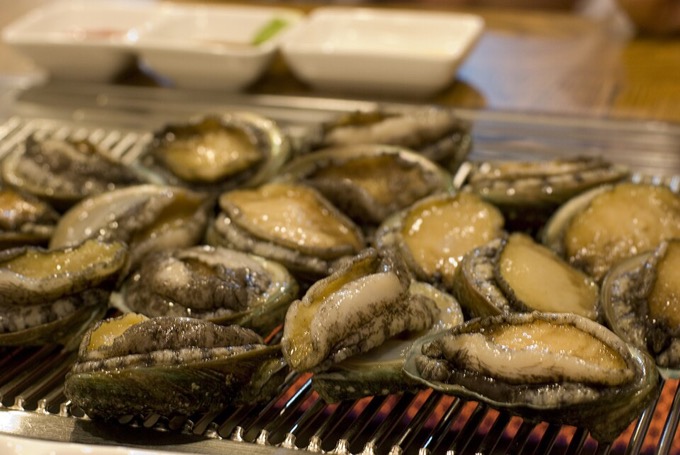
Jeonbokgui (grilled abalone) is literally a dish where abalone is grilled and eaten. Jeonbok-butter-gui (butter-grilled abalone) with vegetables and butter is also a popular variation.
How to Cook Abalone Porridge (2-3 Servings)
Ingredients: 3 abalones (each about the length of a finger), 1 cup* glutinous rice, 5-6 cups* water, 1/2 onion, 1 carrot, 20g chopped chives, soy sauce or salt, 1T sesame oil. *cup measurements refer to small paper cups, not the U.S. cup measure.
1. Preparing the Abalone: Clean the abalone thoroughly, separating the flesh from the shell and innards. Set the innards aside and slice the abalone thinly. Save one piece to use as garnish later for a flavorful finish.
2. Prepping the Rice: Wash the rice thoroughly and soak it in water for about 30 minutes. Drain the water and set the rice aside.
3. Stir-frying the Ingredients: Finely chop the garlic, onion, carrot, and chives. Heat a pot over low heat, add sesame oil, and lightly stir-fry these ingredients. When the onion becomes translucent and the carrot softens, add the sliced abalone and stir-fry together.
4. Cooking the Porridge: Add the soaked rice to the pot and stir-fry with the abalone until the rice turns semi-translucent. Gradually add the water in 2-3 stages and let the rice cook slowly over low heat until it softens. Stir often to prevent sticking at the bottom.
5. Finishing Touches: Once the rice is fully cooked and the porridge reaches a thick consistency, season with soy sauce or salt. For extra flavor, you can drizzle some sesame oil and sprinkle sesame seeds as garnish.
4 places to try Wando Abalone
-
Myeongpum Jeonbokgung
The restaurant runs its own abalone farm, allowing you to enjoy fresh abalone. The most popular dish, "Jeonbok Hansang" (abalone set menu), serves almost every abalone dish imaginable on a single table. Located in the Wando Traditional Market, the restaurant is spacious, making it an excellent choice for group visits.
Signature menu- Jeonbok Hansang 40,000 KRW (abalone porridge, sliced raw abalone, steamed abalone, stir-fried abalone, deep-fried abalone with sweet and sour sauce, etc.) (minimum order for 2)
- Jeonbokjuk 12,000 KRW
- Jeonbok Mulhoe (cold raw abalone soup) 15,000 KRW
- Jeonbokjang Bibimbap (soy sauce marinated abalone bibimbap) 10,000 KRW
- Jeonbokgui 40,000 KRW
- 34-1 Gaepo-ro, Wando-eup, Wando-gun, Jeollanam-do
- Approx. 520 m from Wando Bus Terminal, inside the Wando Traditional Market / Approx. 1.3 km from Wando Port
- 120 seats · Parking: No on-site parking; nearby parking available at Wando Traditional Market Public Parking Lot
- Menu: Korean
-
Wando Moraetteul
It is a restaurant where you can enjoy the "Haeyang Chiyu Bapsang" (marine healing set menu) developed by Wando-gun in 2021. "Haeyang Chiyu Bapsang" features Wando's seafood, including abalone innards, hijiki, green sea fingers, kelp, and seaweed stems.
Signature menu- Haeyang Chiyu Bapsang 25,000 KRW (grilled galbi patties with abalone and seaweed, seafood hot stone pot, etc.)
- 74 Myeongsasimni-gil, Sinji-myeon, Wando-gun, Jeollanam-do
- Approx. 2.4 km from Sinji Intersection on National Road No. 77, near Myeongsasimni Beach
- 88 seats · Parking: Available (up to 10 spaces). Parking available at Myeongsasimni Beach Parking Lot No.7
- Menu: Korean
-
Wando Haemultang
The restaurant serves a rich haemultang (spicy seafood stew), packed with various seafood from Wando, including abalone, clams, crab, and octopus. Another specialty is Haesintang (chicken and seafood soup), a flavorful soup made with chicken, abalone, and seafood, which requires a reservation at least 3 hours in advance. For solo visitors, the haemul ttukbaegi (seafood hot pot), made with abalone and a variety of seafood in a hot pot, is an easy, hassle-free option.
Signature menu- Wando Haemultang (2 servings) 55,000 KRW
- Wando Haemuljjim (spicy braised seafood) (2 servings) 55,000 KRW
- Haesintang 100,000 KRW (reservation required 3 hours in advance)
- Abalone Course (1 serving) 40,000 KRW (reservation required)
- Gim Jeonbok Haemul Ttukbaegi (laver, abalone and seafood hot pot) 12,000 KRW
- 256-1 Jangbogo-daero, Wando-eup, Wando-gun, Jeollanam-do
- Approx. 970 m from Wando Bus Terminal / Approx. 800 m from Wando Port
- 36 seats · Parking: No on-site parking; nearby parking available at public roadside parking lot in front of the restaurant
- Menu: Korean
-
DalSweet
This cafe offers a unique dessert called "Jangbogo Bread," made with Wando abalone. This bread features live abalone that is carefully cleaned, boiled, and then baked whole on top of bread dough. You can enjoy the sweet and savory aroma of the bread, along with abalone's chewy texture. While you can purchase it from department store pop-up stores and online, visiting in person and enjoying it with a Haecho Latte (seaweed latte) is highly recommended.
Signature menu- Jangbogo Bread (abalone bread) 5,500 KRW
- Haecho Latte 4,000 KRW
- Oriental Mandolin and Lemon Tea 4,000 KRW
- 3 Gunnae-gil, Wando-eup, Wando-gun, Jeollanam-do
- Approx. 1.5 km from Wando Bus Terminal / Approx. 710 m form Wando Port
- 34 seats · Parking: No on-site parking; nearby parking available at public roadside parking lot in front of the cafe
- Menu: Korean
Photo: Manji (Flickr) (CC BY-SA 2.0), Wikimedia Commons
Source: Korea Tourism Organization (Taste Your Korea), “K-Local Food Trip 33”, compiled July 2024; text reused with attribution, the guide’s photos are not. Restaurants are not ranked; hours and menus change, confirm before you go.