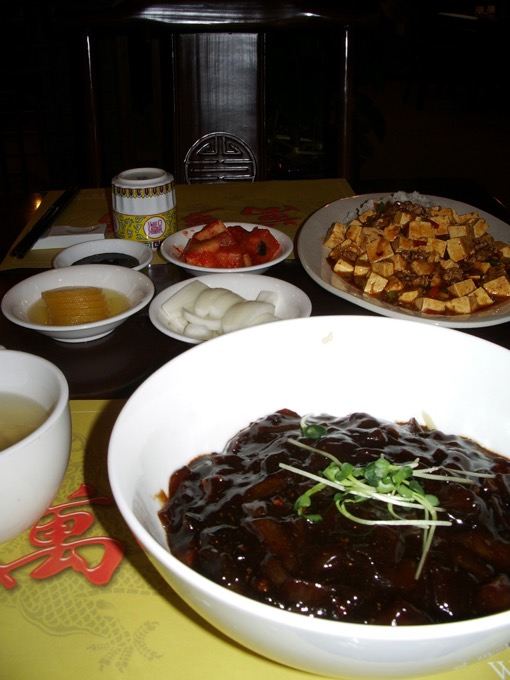
Jjajangmyeon
Black Bean Sauce Noodles
Though jjajangmyeon originated in China, the dish, made by mixing noodles with a glossy black sauce, was adapted to suit Korean tastes.
Over time, it evolved into a new genre of cuisine known as "Korean-style Chinese food" and has become one of the most beloved dishes in Korea.
Jjajangmyeon is a common, affordable comfort food widely available across Korea.
Its rich, oily flavor with a hint of sweetness creates an irresistible taste, leaving you craving more after just one bite.
The story behind Jjajangmyeon
When?
A bowl of jjajangmyeon, or black bean sauce noodles, is a dish that can be enjoyed anytime; its delicious taste transcends seasons, perfect for any day.
Where?
Incheon Chinatown (12-17 Chinatown-ro 26beon-gil, Jung-gu, Incheon), the birthplace of the Korean-style jjajangmyeon, is home to long-standing restaurants specializing in Korean Chinese cuisine, each with its unique cooking styles.
Visitors can choose a restaurant that matches their preferences.
History of Jjajangmyeon
Jjajangmyeon, written as "Zhajiangmian" (炸醬麵) in Chinese, was introduced to Korea following the opening of Incheon Port in 1883.
The dish became popular around the Qing Dynasty concession near the port, where Chinese immigrants from the Qing Dynasty began making and enjoying jjajangmyeon in Korea.
The early versions of jjajangmyeon closely resembled the original zhajiangmian, featuring a sauce made from fermented wheat and beans, along with toppings like pork and vegetables.
This sauce had a brownish tint rather than the deep black color it does now.
Zhajiangmian evolved into jjajangmyeon when the restaurant Gonghwachun-originally opened under the name "Sandong Hoegwan" in 1905 and renamed to "Gonghwachun" in 1912-first recorded the dish's name in Hangeul as jjajangmyeon.
In the 1950s, black bean sauce with caramel coloring became a part of the dish.
Right after the Korean War, the United States began supplying Korea with large amounts of wheat flour, which marked the beginning of jjajangmyeon's distribution to the general public.
By the 1960s, the expansion of pig farming and onion production along with government policies encouraging non-rice grains all contributed to jjajangmyeon's rise as one of Korea's most beloved dishes.
For a deeper exploration of jjajangmyeon's history, visit the Jjajangmyeon Museum, located in the former Gonghwachun building.
Types of Jjajangmyeon
In the early days, jjajangmyeon came in only two varieties: jjajangmyeon and ganjjajang (thick black bean sauce noodles), each distinguished by its sauce and cooking method.
Jjajangmyeon is made by stir-frying a pre-made sauce with noodles, thickened with starch.
Ganjjajang, however, is cooked to order, featuring black bean sauce, onion, pork, and other ingredients stir-fried in oil.
It stands out for preserving the distinct flavors of each ingredient, such as the crisp texture of onions and the savory taste of pork, and is typically served with the sauce separate from the noodles, unlike jjajangmyeon, where the sauce is poured on the noodles.
Over time, jjajangmyeon developed into a variety of styles by incorporating different ingredients while retaining the basic recipe.
Unlike traditional jjajangmyeon, made with roughly chopped meat and vegetables, yuni-jjajang (black bean sauce noodles with minced meat) features finely minced meat and vegetables instead of chunks, while yuseul-jjajang (black bean sauce noodles with julienned meat) includes meat and vegetables cut into finger-length strips.
For a spicier option, sacheon-jjajang (Sichuan black bean sauce noodles) brings in the bold, fiery flavors of Sichuan cuisine, while samseon-jjajang (three-delicacy black bean sauce noodles) adds seafood, such as squid and shrimp.
Some restaurants also offer jaengban-jjajang (jumbo black bean sauce noodles), a platter of jjajangmyeon for two or more people, often served with seafood similar to samseon-jjajang.
Where to Eat Jjajangmyeon
Incheon's Chinatown is home to historic Korean-Chinese restaurants operated by generations of Korean-Chinese families.
These restaurants offer a variety of jjajangmyeon dishes, each with unique twists and signature menus.
Some even serve a traditional version of jjajangmyeon with a yellowish sauce-a departure from the more familiar dark sauce. This version is made with Chinese bean pastes like doubanjiang or huangdoujiang.
While Koreans sometimes refer to it as Hayan ("white") Jjajangmyeon, the sauce actually has a golden hue, blending closely with the color of the noodles.
Another beloved Korean-Chinese dish is jjamppong, a spicy seafood noodle soup.
The choice between jjajangmyeon and jjamppong often sparks lively debates, similar to those over fried vs. yangnyeom (seasoned) chicken or doenjang jjigae vs. kimchi jjigae.
To satisfy both cravings, some restaurants serve jjamjjamyeon (a split bowl with half jjajangmyeon and half jjamppong) letting diners enjoy the best of both worlds in one meal.
How to Cook Jjajangmyeon (1 serving)
Ingredients | 125g chunjang (tianmian sauce), 150g lean pork, 1 onion (approx. 130g), 250g frozen Chinese noodles (or 1 pack of ramyeon noodles), cooking oil
1. Heat cooking oil in a frying pan and stir-fry the pork.
2. Add the onion, increase the heat to high, and continue to stir-fry.
3. Add chunjang, stir-fry some more, then season with salt and sugar to taste.
4. Stir-fry until onions turn translucent.
5. While preparing the sauce, boil the noodles (they can also be pre-boiled). Use the noodle cooking water to adjust the sauce's thickness as needed.
6. Place the cooked noodles in a bowl, spoon the jjajang sauce on top, and garnish with julienned cucumber or a soft-fried egg, if desired.
4 places to try Jjajangmyeon
-
Sinseung Banjeom
This restaurant, run by the granddaughter of Gonghwachun's founder Woo Hee-gwang, is best known for its signature Yuni-Jjajang-a sweet, savory sauce made with minced meat and vegetables, served separately from the noodles, similar to ganjjajang, and topped with a sunny-side-up fried egg. Other popular dishes include the chewy Chapssal Tangsuyuk (deep-fried pork in a sweet rice batter with sweet and sour sauce) and the Samseon Haemul Nurungjitang (a three-delicacy sizzling rice soup with seafood).
Signature menu- Yuni-Jjajang 10,000 KRW
- Chapssal Tangsuyuk (small) 30,000 KRW
- 31-3 Chinatown-ro 44beon-gil, Jung-gu, Incheon
- Approx. 100m from Exit 1 of Incheon Station on Seoul Subway Line 1, within Incheon Chinatown
- 86 seats · Parking: No on-site parking; nearby parking available at Chinatown Public Parking Lot (28-12 Chinatown-ro 44beon-gil, Jung-gu, Incheon)
- Menu: Korean, English
-
Taehwawon
Now in its third generation, this Korean-Chinese restaurant, established in 1926, is one of the earliest in Incheon Chinatown and is renowned for preserving traditional flavors. Its signature Incheon Hyangto Jjajang (Incheon-style black bean sauce noodles) is crafted with the restaurant's own chunjang and seasonal ingredients, offering a richer, deeper taste than jjajangmyeon made with store-bought sauce. The restaurant also offers a vegetarian menu.
Signature menu- Incheon Hyangto Jjajang 9,000 KRW
- Hayan Jjajang (old-fashioned black bean sauce noodles) 9,000 KRW
- Jjajang 6,500 KRW
- 10 Chinatown-ro 59beon-gil, Jung-gu, Incheon
- Approx 270 m from Exit 1 of Incheon Station on Seoul Subway Line 1, within Incheon Chinatown
- 240 seats · Parking: Available (up to 13 spaces)
- Menu: Korean, English, Chinese
-
Mandabok
This restaurant offers Baengnyeon Jjajang (meaning "hundred-year jjajang"), a traditional style of Hayan Jjajang, or old-fashioned black bean sauce noodles. The dish features noodles topped with a soy sauce-based sauce along with pork, seafood, and vegetables.
Signature menu- Hayan Baengnyeon Jjajang 8,000 KRW
- Hayan Jjamppong (spicy white seafood noodle soup) 10,000 KRW
- 36 Chinatown-ro, Jung-gu, Incheon
- Approx 320 m from Exit 1 of Incheon Station on Seoul Subway Line 1, within Incheon Chinatown
- 110 seats · Parking: Available (up to 8 spaces)
- Menu: Korean, English, Chinese
-
Jjajangmyeon Museum
Housed in a remodeled building formerly used by Gonghwachun until its closure in 1983, this museum showcases the origins and evolution of jjajangmyeon, highlighting its various types and preparation methods. The exhibition also features materials on the history of Incheon Chinatown and the legacy of Gonghwachun. Operating Hours: 09:00-18:00 | Closed on Mondays (if Monday is a public holiday, the following day). Admission: Adults 1,000 KRW, Teenagers 700 KRW, Military Personnel / Police Officers 500 KRW, Children Free of Charge.
- 56-14 Chinatown-ro, Jung-gu, Incheon
Photo: Scarlet Sappho (CC BY-SA 2.0), Wikimedia Commons
Source: Korea Tourism Organization (Taste Your Korea), “K-Local Food Trip 33”, compiled July 2024; text reused with attribution, the guide’s photos are not. Restaurants are not ranked; hours and menus change, confirm before you go.