Tteokgalbi
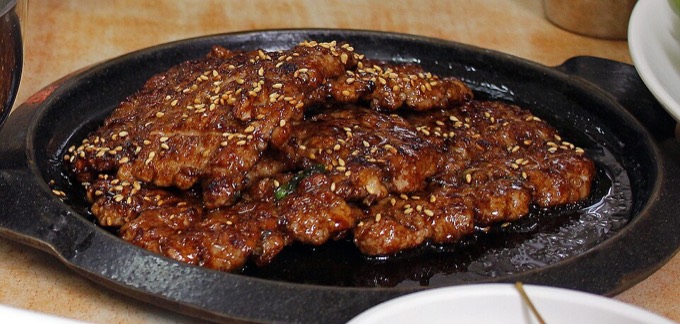
Grilled Galbi Patties
Tteokgalbi: Premium Korean Cuisine Made with Care
The story behind Tteokgalbi
When?
Tteokgalbi (grilled galbi patties) can be enjoyed anytime, in any season.
Where?
Damyang in Jeollanam-do is widely known for its bamboo and tteokgalbi, and there are many restaurants specializing in tteokgalbi throughout the town.
Origins
The exact origins of tteokgalbi, considered one of the high-end Korean dishes, are not well known. However, three main theories have been passed down through history.
The first theory can be found in Jinchanuigwe, the royal protocols for banquets. This book mentions a dish called seopsanjeok (grilled marinated minced meat), similar to today's tteokgalbi.
Seopsanjeok involves mixing minced meat with crushed bean curd to make a dough, which is then shaped into squares and grilled.
The second theory suggests that during the early Joseon period, a Confucian scholar named Song Hui-gyeong, who settled in Damyang, developed and passed down the recipe for tteokgalbi, though no precise records exist.
The third theory posits that in the early 1900s, court ladies and senior attendants popularized tteokgalbi by introducing it to commoners as one of the royal dishes.
While none of these theories definitively explain the origin of tteokgalbi, what is significant is that all are linked to the royal court.
How It's Made
Making Damyang tteokgalbi requires a lot of effort.
First, cut the beef galbi into pieces, remove the meat from the bones, and finely chop the meat. While using a machine is more convenient, it can cause the juices to escape, so traditionally, a knife is used for a richer flavor.
Next, shape the minced meat into patties, and reattach the bones removed earlier to create the signature tteokgalbi appearance.
Finally, evenly apply the marinade and grill until the tteokgalbi is glossy and chewy. The marinade is made by mixing soy sauce, sesame oil, pepper, garlic, ginger and a touch of honey or sugar for sweetness.
How to Enjoy It
In Damyang, tteokgalbi is enjoyed in two main ways: grilled or cooked in a hot pot. However, grilling is the more common method.
Since it is pre-cooked, you only need to heat it briefly to warm it through. As is typical with Korean Namdo cuisine, tteokgalbi is often served with a variety of side dishes and leafy wraps.
When prepared as a hot pot, tteokgalbi takes on a flavor similar to that of bulgogi hot pot, which uses well-marbled rib eye. The rich, slightly sweet broth absorbs the flavors of the tteokgalbi, enhancing its taste.
In Damyang, the largest bamboo-producing region in Korea, you can also enjoy daetongbap (bamboo-steamed rice), a dish made with rice and various ingredients cooked in bamboo.
Many tteokgalbi restaurants in Damyang serve daetongbap, so ordering it along with your tteokgalbi brings a more enjoyable meal.
3 places to try Tteokgalbi
-
Sinsikdang
Established in 1932, this restaurant has been passed down through four generations. One of its unique qualities is making its own fermented soybeans, soy sauce, and red chili paste, giving its dishes a rich and deep flavor.
Signature menu- Tteokgalbi 35,000 KRW
- Juksun Tteokgalbi Jeongol (bamboo shoot and tteokgalbi hot pot) 40,000 KRW
- 18-13 Damju 2-gil, Damyang-eup, Damyang-gun, Jeollanam-do
- Approx. 800 m from Damyang Bus Terminal / Approx. 5.5 km from Damyang TG on Gwangju-Daegu Expressway
- 168 seats · Parking: Available (up to 30 spaces)
- Menu: Korean, English, Japanese, Chinese
-
Deokinkwan
Originally opened in 1963 under the name 'Deokin Eumsikjeom,' this establishment boasts over 60 years of history. It is run by Park Gyu-wan, a designated Korean Food Grand Master No. 82, specializing in meat (grilled galbi). Initially, the restaurant served Korean table d'hote focused on galbi, but it has since evolved into a tteokgalbi specialty restaurant. The restaurant uses Korean cow beef ribs marinated in the master's secret sauce. (Website: www.deokinkwan.com, Language: Korean)
Signature menu- Master's Traditional Tteokgalbi 37,000 KRW
- Korean LA Tteokgalbi 33,000 KRW
- Korean Tteokgalbi 29,000 KRW
- Korean Tteokgalbi with Medicinal Herbs 22,000 KRW
- 1121 Jukhyang-daero, Damyang-eup, Damyang-gun, Jeollanam-do
- Approx. 1.1 km from Damyang Bus Terminal / Approx. 3.2 km from Damyang TG on Gwangju-Daegu Expressway
- 324 seats · Parking: Available (up to 100 spaces)
- Menu: Korean, English, Japanese, Chinese
-
Damyang Apzip
This restaurant is famous for serving Damyang tteokgalbi, served alongside noodles. They use local produce and focus on enhancing the ingredients' natural flavors. When you order tteokgalbi here, it's presented on a large plate with a salad, much like a Western-style brunch. Their housemade noodles, crafted from a blend of buckwheat and Damyang bamboo leaves, are also a standout.
Signature menu- Half and Half Charcoal-grilled Tteokgalbi 15,500 KRW
- Damyang Tteokgalbi Noodles 17,000 KRW
- Noodles with Bamboo Shoots and Perilla Oil 14,000 KRW
- Crispy Bamboo Shoot Mandu 12,000 KRW
- 22 Jukhyangmunhwa-ro, Damyang-eup, Damyang-gun, Jeollanam-do
- Approx. 980 m from Damyang Bus Terminal / Approx. 3.1 km from Damyang TG on Gwangju-Daegu Expressway
- 104 seats · Parking: Available (up to 10 spaces)
- Menu: Korean, English, Japanese, Chinese
Photo: Minseong Ki (CC BY-SA 4.0), Wikimedia Commons
Source: Korea Tourism Organization (Taste Your Korea), “K-Local Food Trip 33”, compiled July 2024; text reused with attribution, the guide’s photos are not. Restaurants are not ranked; hours and menus change, confirm before you go.